 Deutsch
  English
  Español
  Français
  Bahasa Indonesia
  日本語
日本語  한국어
한국어  Nederlands
  Português
  Tiếng Việt
  中文
中文 Soybean Oil Market in August 2026: Analysis of the Unusual Calm and Macro Scenarios for Year-End
AI Report · Soybean oil
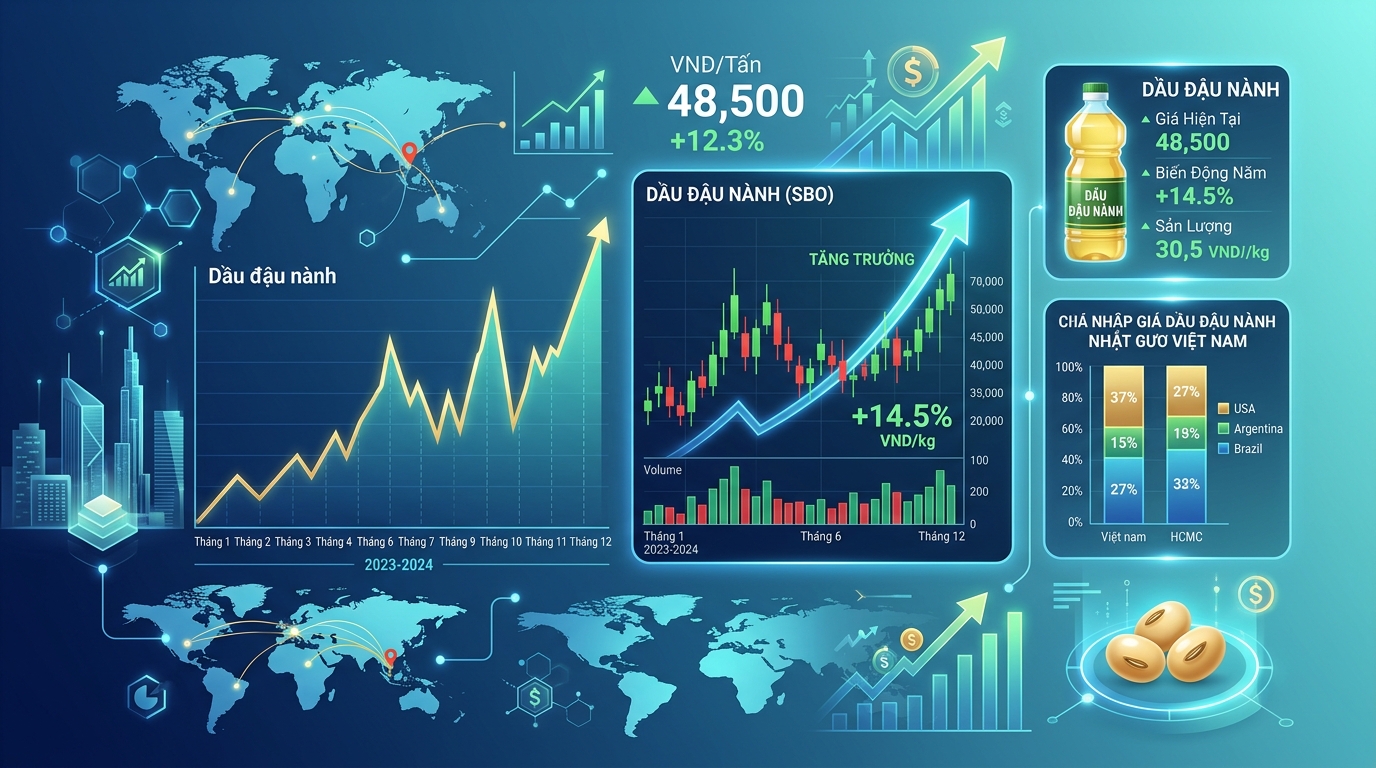
The global agricultural market, particularly the vegetable oil sector, is entering an extremely sensitive phase as factors involving weather, renewable energy policies, and geopolitical volatility intertwine. Entering August 2026, soybean oil prices are showing notable signals following a volatile July. This article will delve into an analysis of the soybean oil market situation in Vietnam and globally, dissecting the causes of the current stability and forecasting macroeconomic impacts in the near future.
1. Overview of Global and Vietnamese Soybean Oil Price Trends
According to the latest data from international commodity exchanges (specifically the CBOT - Chicago), the price of soybean oil in the early days of August 2026 is showing a surprising state of "calm." Specifically, as of August 4, 2026, the price recorded was at 0.00 UScents/lb, reflecting a temporary pause in trading or an extreme wait-and-see state among investors before key crop reports are released.
To gain an objective perspective, we need to look back at the previous month's performance. In July 2026, the average soybean oil price remained at 68.30 UScents/lb (equivalent to approximately 39,579,582 VND/ton). The fluctuation range over the last 30 days was quite wide, from a low of 0.00 to a high of 73.16 UScents/lb (approximately 42,395,933 VND/ton). The decline from the peak of over 73 UScents to the current sideways state suggests that the market has absorbed all negative news and is seeking a new equilibrium zone.
In the domestic Vietnamese market, the price of imported crude soybean oil usually lags behind the CBOT by 2 to 3 weeks. Because Vietnam is heavily dependent on supply from the US, Brazil, and Argentina, the stability of global prices in the first week of August provides a sigh of relief for domestic cooking oil and animal feed producers. Retail prices and raw material prices at ports such as Cai Mep and Hiep Phuoc are maintaining stability, with no sudden adjustments compared to the end of July.
2. Analysis of Causes for Volatility and Current Sideways State
There are many factors contributing to the soybean oil price stalling at its current level after hitting a peak last month. Below are the main reasons:
- "Weather Market" Phase: August is a critical time for the US soybean crop – the pod-filling stage. Any information regarding rainfall or heatwaves in the Midwest could cause prices to spike. The current silence suggests that weather forecasts are quite favorable, causing upward price pressure to be temporarily pushed back.
- Correction After a Hot Rally: After reaching 73.16 UScents/lb in July, hedge funds executed massive profit-taking. This created technical selling pressure, pulling prices to a lower zone and maintaining an accumulation state.
- Abundant Supply from South America: Brazil and Argentina continue to boost soybean oil exports to earn foreign currency, helping to quench the global supply thirst. Inventory levels in major exporting countries are at safe levels, preventing short-term price shocks.
- Waiting for the WASDE Report: Traders are holding their breath for the World Agricultural Supply and Demand Estimates (WASDE) report from the US Department of Agriculture (USDA). This is usually the "compass" for price trends in the second half of the year.
3. Impact of Macroeconomic Factors on Soybean Oil Prices
Soybean oil prices are not only influenced by internal agricultural supply and demand but are also "hostages" to complex macroeconomic variables.
3.1. Correlation with Crude Oil and Energy Prices
Soybean oil is a key raw material for producing Biodiesel (biofuel). When global crude oil prices fluctuate, the demand for biofuel blending changes accordingly. In the context of countries tightening carbon emission regulations by 2026, the demand for soybean oil for energy purposes is growing steadily, creating a solid "price floor" for this commodity.
3.2. Monetary Policy and the Strength of the USD
Most international soybean oil transactions are denominated in US dollars (USD). As of August 2026, if the US Federal Reserve (Fed) maintains high interest rates to curb inflation, a strong USD will make soybean oil more expensive for importing countries like Vietnam, thereby dampening buying demand and putting downward pressure on the CBOT.
3.3. Geopolitical Situation and Logistics
Conflicts along vital maritime routes remain an unknown variable. Rising shipping and insurance costs can push CFR prices (cost at destination port) higher even if FOB prices (cost at departure port) remain unchanged. Vietnam, as a net importer, needs to pay special attention to logistics costs during this period.
4. Market Outlook and Short-Term Forecasts
Based on actual data and the current context, we can make some assessments for the last week of August and the following period:
First, the current stable state is only temporary. With a fluctuation range of over 73 UScents in the past 30 days, the market is accumulating energy for a new wave of volatility. If the US crop report shows lower-than-expected yields due to localized drought, soybean oil prices could quickly return to the 72 - 75 UScents/lb range.
Second, in Vietnam, businesses should take advantage of the sideways or slightly declining price movements in early August to lock in purchase contracts for the fourth quarter. This is a "golden" time before food consumption demand rises during the year-end holidays, which typically drives vegetable oil prices higher.
Third, it is necessary to closely monitor the developments of Palm Oil in Malaysia and Indonesia. Palm oil and soybean oil are two directly substitutable commodities. A decline in palm oil production due to El Nino/La Nina weather phenomena could indirectly pull soybean oil prices up as capital shifts from one commodity to the other.
5. Conclusion
The soybean oil market in August 2026 is in a "waiting for signals" state. Although current prices are stable compared to the excitement of July, risk factors regarding weather and macroeconomic volatility are always present. For investors and businesses in Vietnam, risk management through commodity price hedging tools on the exchange is essential to protect profits against unforeseen fluctuations in the international market.
We need to continue closely monitoring reports from the USDA and the USD/VND exchange rate to make the most accurate business decisions during this challenging period. Today's stability could be a stepping stone for a strong upward trend at the end of 2026.