 Deutsch
  English
  Español
  Français
  Bahasa Indonesia
  日本語
日本語  한국어
한국어  Nederlands
  Português
  Tiếng Việt
  中文
中文 Beef Market in September 2026: Strategic Stability Following a Cycle of Volatility and New Macroeconomic Impacts
AI Report · Beef
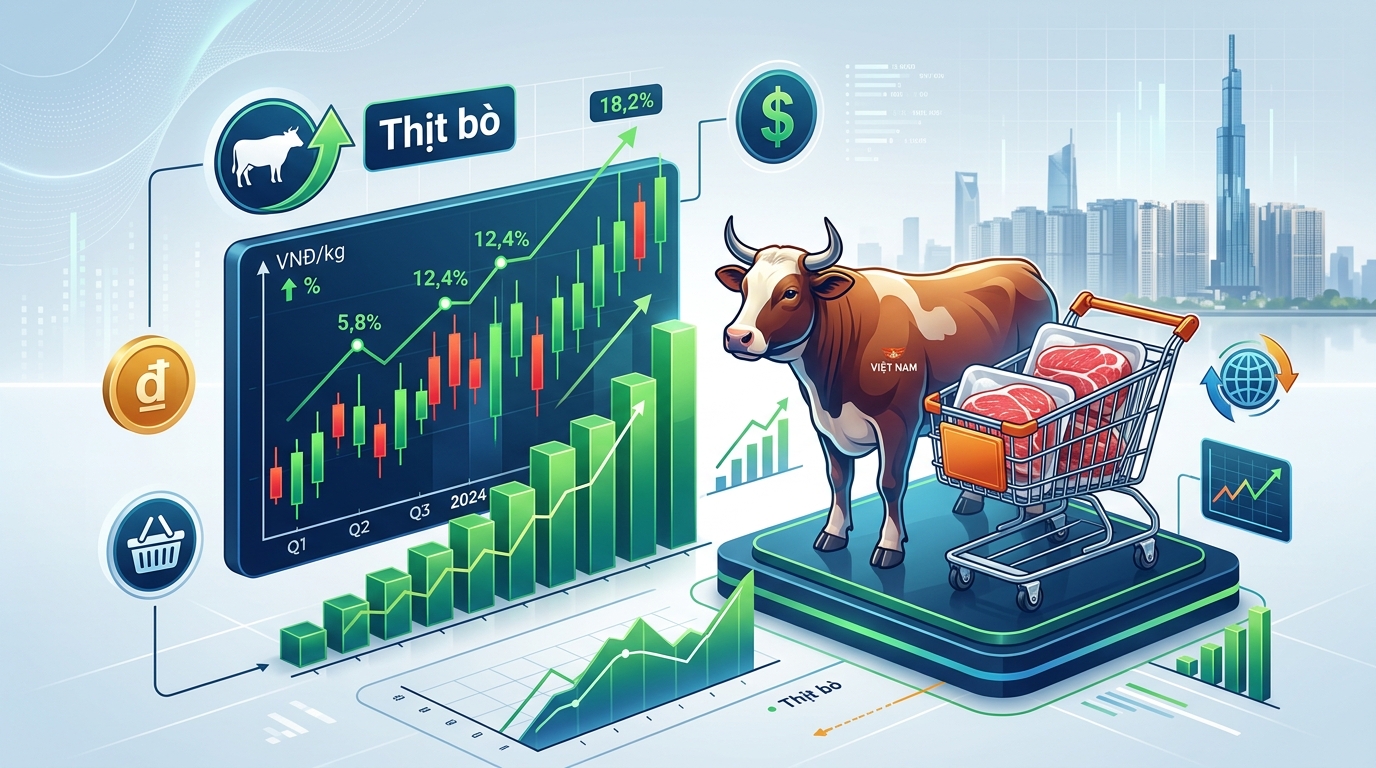
Entering September 2026, the global food market in general and the beef industry in particular are witnessing some truly interesting developments. After a period of sharp volatility driven by livestock cycles and geopolitical factors, beef prices in the first days of September are showing remarkable stability. This article will delve into an analysis of the overall picture of beef prices in Vietnam and around the world, based on the latest actual data, while dissecting the macroeconomic causes silently driving the market during this period.
1. Overview of World and Vietnam Beef Prices in Early September 2026
Based on data updated as of September 1, 2026, world beef prices (referenced from the Brazilian market—one of the world's largest beef exporters) are maintaining a level of 344.40 BRL/kg. When converted to tons and Vietnamese Dong, this price is equivalent to approximately 1,422,826,608 VND/ton.
Looking at the trends over the past 30 days, we see a clear stable trend. Specifically:
- Current Price: 344.40 BRL/kg (0% change compared to the previous session).
- Current Month Average Price: 344.40 BRL/kg.
- Previous Month Average Price (August 2026): 345.87 BRL/kg (equivalent to approximately 1,428,899,648 VND/ton).
- 30-Day Fluctuation Range: From 342.50 BRL to 350.20 BRL/kg.
The slight decline in this month's average price compared to the previous month (a decrease of approximately 1.47 BRL/kg) indicates that upward price pressure has somewhat cooled. The market is finding a new equilibrium point in the price range of 1.414 billion to 1.446 billion VND/ton. In the Vietnamese market, the price of imported beef from Brazil, Australia, and the US also reflects this trend, with retail prices at supermarkets and wholesale markets remaining stable, without any shocking spikes for consumers in the first days of September.
2. Analysis of Causes for Stability and Slight Fluctuations
Why are beef prices maintaining a "sideways" trend even though the world is still facing many challenges? There are three main groups of causes to consider:
2.1. Recovery of Total Herds in Key Exporting Countries
After a period of strong herd rebuilding in 2024-2025, beef supply from powerhouses like Brazil and Australia has begun to flow into the market more steadily. Especially in Brazil, thanks to favorable weather conditions for pastures during the last rainy season, the slaughter weight of cattle reached optimal levels, helping to offset previously high livestock production costs. This abundance of supply is the most effective "brake" on price increases.
2.2. Cooling Feed Costs
Corn and soybean prices on the Chicago exchange saw downward adjustments in the second and third quarters of 2026. This directly reduced the production cost of beef in countries using feedlot models, such as the US and parts of Brazil. When input costs are stable, producers are no longer under pressure to push up selling prices to protect profit margins, thereby creating the stability in the global price list that we see at 344.40 BRL/kg.
2.3. Market Sentiment During the Transition Period
September is often a transition period between summer and the year-end holiday season in many regions. Demand for beef for outdoor grilling in the Northern Hemisphere is gradually decreasing, while demand for major holidays like Christmas or the Lunar New Year has not yet truly exploded. This slight "gap" in demand gives beef prices no incentive to break out in the short term.
3. Macroeconomic Impacts on Beef Prices in September 2026
To better understand the figure of 1,422,826,608 VND/ton, we need to place it in the context of the macroeconomic factors dominating the global economy in 2026.
3.1. Exchange Rate Fluctuations and Monetary Policy
Beef prices are listed in Brazilian Real (BRL) but international transactions are primarily conducted in USD. The stability of the BRL against the USD in late August and early September helped prevent the converted beef price from being disrupted. In Vietnam, the State Bank's flexible exchange rate management policy helps keep imported beef prices from rising due to VND/USD exchange rate differences, protecting the wallets of domestic consumers.
3.2. Logistics and Green Supply Chains
By 2026, regulations on carbon emissions and "deforestation-free beef" from the European Union (EU) and high-end markets have begun to be strictly applied. This forces exporters to invest heavily in traceability systems. Although this cost may push prices up in the long run, in the short term, businesses are striving to optimize logistics (ocean freight rates have stabilized compared to the post-pandemic period) to keep prices competitive.
3.3. Consumption Trends and Alternative Products
A macroeconomic factor that cannot be ignored is the rise of meat alternatives and lab-grown meat. Although they do not yet account for a large share, their presence has created a certain competitive pressure, forcing the traditional beef industry to maintain reasonable prices to retain consumers in a context where food inflation remains a constant concern.
4. Assessment of the Beef Market in Vietnam
In the Vietnamese market, September is the time when students return to school and demand from collective kitchens increases. However, domestic beef prices (yellow cattle, seared beef) remain stable due to abundant supply from domestic farmers and large farms in the Central Highlands.
Imported beef continues to dominate the restaurant and hotel segment. With a price of 344.40 BRL/kg (base price excluding taxes and fees), after adding import taxes, shipping costs, and distributor profits, Brazilian beef prices in Vietnam remain very competitive compared to Australian or American beef. This suggests that the trend of Brazilian beef will continue to increase its market share in Vietnam this month.
5. Forecast and Recommendations for Stakeholders
Based on current data, we offer some assessments for the remainder of September 2026:
- Regarding prices: Beef prices are expected to continue to maintain a range of 340.00 - 355.00 BRL/kg. A deep price drop is unlikely because energy costs remain high, affecting slaughter and cold storage.
- For importers: This is an appropriate time to lock in medium-term contracts to prepare inventory for the year-end peak season. The fact that prices are in a stable zone (0% change) is a good signal for cost risk management.
- For consumers: There is no need to worry too much about a sudden spike in beef prices this month. This is a good time to choose quality beef products at affordable prices.
Conclusion
The beef market in the week from September 1, 2026, to September 30, 2026, is showing a calm face in the face of economic headwinds. The price of 344.40 BRL/kg is not just a number, but the result of a fragile balance between recovering supply and macroeconomic pressures on production costs. Closely monitoring exchange rate developments and international trade policies will be the key for businesses and consumers to make the most accurate decisions during this period.
The information in this article is for reference and analysis based on actual market data at the time of publication.