 Deutsch
  English
  Español
  Français
  Bahasa Indonesia
  日本語
日本語  한국어
한국어  Nederlands
  Português
  Tiếng Việt
  中文
中文 Rice Market in July 2026: Heat from Global Price Hikes and Notable Macroeconomic Volatility
AI Report · Rice
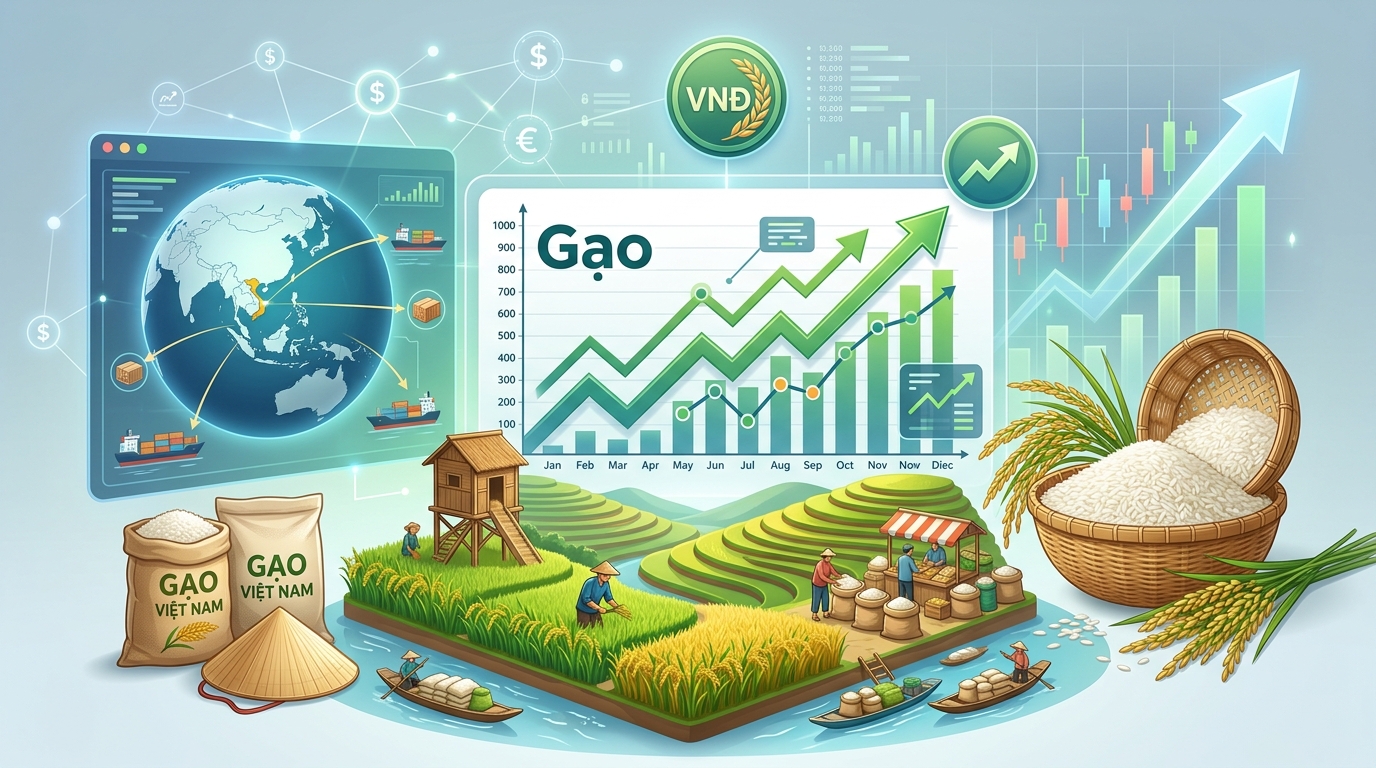
Entering the first days of July 2026, the global agricultural market, particularly rice, is witnessing unexpected and dramatic developments. After a relatively stable period in the second quarter, rice prices have begun a new growth cycle with significant intensity. This article delves into the actual data from the first week of July 2026, identifies the core causes, and assesses the macroeconomic impacts reshaping the global rice price map as well as the situation in Vietnam.
1. Overview of Rice Price Developments in the First Week of July 2026
According to the latest updates from market databases, global rice prices are maintaining a clear upward trend. As of July 7, 2026, the price of rice reached 13.17 USD/CWT (equivalent to approximately 6,924,790 VND/ton). This is a notable figure when compared to the average price of the previous month.
Looking at the daily price tracking table since the beginning of July, we can see a spectacular breakout:
- July 1, 2026: 12.94 USD/CWT (Starting the month at a high price level).
- From July 2 to July 5, 2026: Prices remained stable at 12.81 USD/CWT.
- July 6, 2026: Prices saw a slight correction down to 12.80 USD/CWT.
- July 7, 2026: Prices surged to 13.17 USD/CWT, marking an increase of +2.85% in just 24 hours.
The price difference of 0.37 USD (approximately 191,990 VND/ton) in the most recent day shows that market sentiment is very bullish. Compared to the previous month's average of 12.46 USD (6,553,960 VND/ton), the current average price for July has reached 12.87 USD (6,769,620 VND/ton). The fluctuation range over the past 30 days has been between 11.81 and 13.22 USD, indicating that the current price is approaching the monthly peak.
2. Analysis of Causes Behind Rice Price Volatility
The sudden surge in rice prices in the first week of July 2026 is not a coincidence but the result of a combination of supply-demand factors and market sentiment.
Temporary Supply Shortfalls in Major Exporting Countries
During this period, leading rice exporters such as Thailand and Vietnam are transitioning between harvests. In Vietnam, the Summer-Autumn crop in many localities has entered its final stage, while the Autumn-Winter crop has not yet reached peak harvest. The scarcity of available stock in warehouses has pushed asking prices higher. Simultaneously, reports from India indicate that the government continues to maintain strict export controls to ensure domestic food security in the face of adverse weather forecasts, which directly reduces the volume of rice supplied to the global market.
Strong Import Demand from Traditional Markets
Major rice-importing countries in Southeast Asia, such as Indonesia and the Philippines, are ramping up purchases to bolster national reserves. Notably, in the first week of July, Indonesia announced new large-scale import tenders, creating a psychological boost that led traders to drive prices higher. Demand from African nations for low-cost white rice has also increased due to concerns that prices will continue to escalate in the second half of 2026.
Weather and Climate Change Factors
2026 is forecast to be a year strongly affected by extreme weather phenomena. Unusually heavy rains in key rice-growing regions in Asia have affected drying and transportation schedules. Concerns over declining rice quality due to high humidity have forced exporters to raise prices to compensate for processing and storage costs.
3. Macroeconomic Influences on Global Rice Prices
Beyond factors specific to the rice industry, the global macroeconomic context in July 2026 also plays a key role in shaping price trends.
USD Fluctuations and Exchange Rates
Rice is a commodity primarily priced in USD on the international market. In the first week of July, the volatility of the Dollar Index (DXY) directly impacted converted rice prices. When the USD shows signs of slight weakness against other major currencies, prices of USD-denominated commodities tend to rise to compensate for value. In Vietnam, the high USD/VND exchange rate also makes export rice prices, when converted to local currency, more expensive, affecting the profit margins of exporters and domestic paddy procurement prices.
Logistics Costs and Energy Prices
Global oil prices in July 2026 remain high as geopolitical instability in the Middle East shows no signs of cooling down. This leads to increased sea freight and domestic logistics costs. For a commodity with low unit value but high shipping volume like rice, transportation costs account for a significant proportion of the total cost. Rising sea freight rates have forced exporters to add these costs to FOB and CIF prices, pushing global rice prices to new highs.
Global Food Security Policies
In a context where food inflation remains a concern for many governments, trade protectionist policies are trending back. The implementation of export taxes or quotas by some countries to keep domestic food prices stable has inadvertently created a supply squeeze on the global market. This creates a vicious cycle: rising prices lead to anxiety, anxiety leads to hoarding, and hoarding continues to push prices even higher.
4. Impact on the Vietnamese Rice Market
Vietnam, as one of the world's top three rice exporters, is not immune to this cycle. Domestic rice prices in the week from July 1 to July 7 reacted in line with global prices.
For farmers: The surge in global rice prices to 13.17 USD/CWT is a positive signal. The price of fresh paddy in fields in the Mekong Delta provinces has recorded a slight increase of 200 - 500 VND/kg depending on the variety. This helps improve income for farmers in a context where fertilizer and pesticide costs remain high.
For exporters: This is a challenging period. Although selling prices are rising, businesses face risks regarding the supply of raw paddy. Companies without good storage or those that have not signed prior procurement contracts are struggling to find goods to fulfill orders signed earlier at lower prices. Profit margins in the rice export industry are narrowing because domestic procurement prices are rising faster than export prices.
5. Outlook and Forecast for the Remainder of July 2026
Based on actual data and macroeconomic analysis, we offer the following outlook for rice price trends for the rest of July 2026:
- Price Trend: Rice prices are unlikely to drop significantly in the short term. With the current price of 13.17 USD/CWT, the market may see a few technical corrections (sideways or slight declines) after the hot rally, but the dominant trend remains upward or anchored at a high level.
- Resistance Level: The 13.50 USD/CWT level will be a key psychological resistance threshold. If reports on supply from India continue to be negative, rice prices could easily break through this level.
- Advice for Traders: It is necessary to closely monitor announcements regarding import quotas from Indonesia and the Philippines, while also paying attention to USD movements. Risk management through futures contracts or diversifying supply sources is essential in this volatile market environment.
In summary, the first week of July 2026 has established a new price floor for the global rice market. With a +2.85% increase and a value exceeding 6.9 million VND/ton, rice is asserting its heat in the international agricultural portfolio. Macroeconomic fluctuations regarding exchange rates, energy, and food security policies will continue to be the "conductors" coordinating the rhythm of rice prices in the coming time. Businesses and investors need a comprehensive view and flexible strategies to adapt to this volatile market environment.
This article is synthesized based on market data as of July 7, 2026. Figures may change depending on actual developments on the exchange and subsequent updated reports.