 Deutsch
  English
  Español
  Français
  Bahasa Indonesia
  日本語
日本語  한국어
한국어  Nederlands
  Português
  Tiếng Việt
  中文
中文 Aluminum Market in August 2026: Global Aluminum Prices Surpass $3,300, Cost Pressures Weigh Heavily on Vietnam's Manufacturing Sector
AI Report · Aluminum
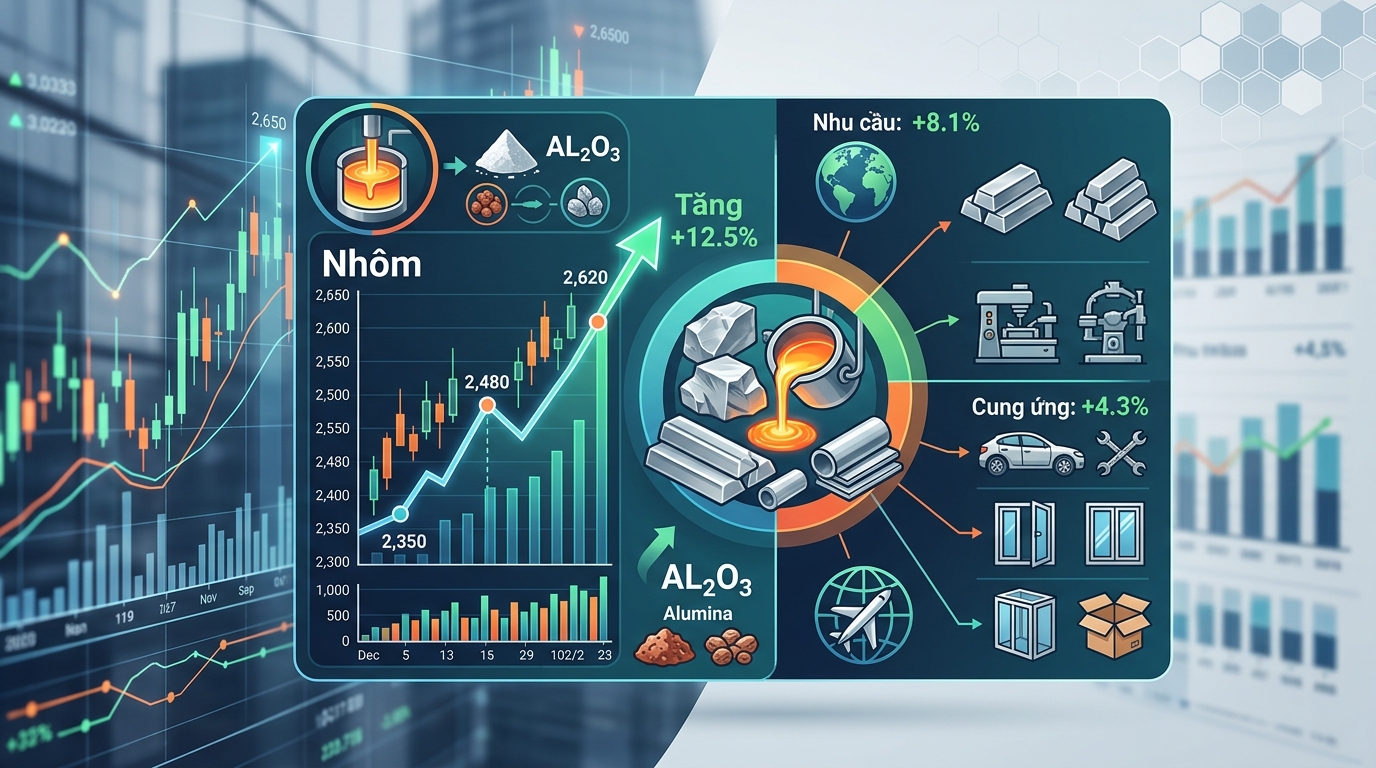
Entering August 2026, the global non-ferrous metals market, particularly aluminum, is witnessing powerful and unexpected price surges. According to actual data from major metal exchanges such as the LME (London Metal Exchange), aluminum prices have established new milestones, exerting direct pressure on the global supply chain and manufacturing enterprises in Vietnam. This article provides a detailed analysis of aluminum price fluctuations from August 1, 2026, to August 31, 2026, delving into the core causes and macroeconomic factors shaping market trends.
1. Overview of Aluminum Price Trends in August 2026
August 2026 recorded a steady but decisive growth trend for aluminum prices. From the very first days of the month, aluminum prices maintained high levels above $3,100/mt and continuously broke through key resistance levels.
Specifically, on August 1, 2026, the aluminum price opened at $3,194.70/mt (equivalent to approximately 83.8 million VND/ton). After a vibrant week of trading, by August 10, 2026, the price reached $3,336.30/mt (approximately 87.5 million VND/ton). This is the highest price level in the past 30 days, marking an increase of +1.82% in just the most recent trading session, corresponding to a price difference of +$59.75/mt (approximately 1.56 million VND/ton).
Looking at the broader picture, the average price for August is currently at $3,252.11/mt, significantly higher than the average of $3,152.38/mt in July 2026. The fluctuation range over the last 30 days lies between $3,137.80 and $3,336.30/mt. This indicates that the market is in a strong bullish cycle, where each subsequent trough is higher than the previous one and new peaks are continuously being established.
2. Analysis of Causes Behind Aluminum Price Fluctuations
The sudden price surge of aluminum in the first 10 days of August 2026 is not a coincidence but the result of a combination of supply-demand and geopolitical factors:
- Tightening of raw material supply: The supply of bauxite and alumina (the primary raw materials for aluminum production) in major exporting countries is experiencing disruptions. Logistics issues in Guinea and strict environmental regulations in Australia have driven up input costs, forcing aluminum smelters to adjust selling prices to protect profit margins.
- Energy costs remain high: Aluminum production is an extremely energy-intensive process (often referred to as "solidified electricity"). In the context of natural gas and electricity prices in Europe and several regions in Asia showing signs of escalating again in the summer of 2026, the cost of aluminum production cannot cool down.
- Explosive demand from the green energy sector: Aluminum is an indispensable component in the construction of solar panels, wind turbine support frames, and especially in electric vehicle (EV) production. The push by nations to meet Net Zero targets by 2026 has created a massive demand that far exceeds the current supply capacity of mining operations.
- Low inventory levels at exchanges: Aluminum inventory levels at LME warehouses fell to warning levels in the first week of August. When available supply is low, any negative news regarding production can trigger speculative buying orders, rapidly driving prices higher.
3. Macroeconomic Factors Affecting the Aluminum Market
Beyond industry-specific factors, the global macroeconomic context in August 2026 serves as a key "catalyst" for the upward momentum of aluminum prices:
Monetary Policy and USD Fluctuations
During this period, economic reports from the US showed that inflation is gradually being brought under control, leading to expectations that the Federal Reserve (Fed) will begin a cycle of interest rate cuts or at least stop monetary tightening. This has caused the USD to weaken slightly. Since aluminum is priced in USD on the international market, when the USD depreciates, aluminum becomes cheaper for investors holding other currencies, thereby boosting buying power and driving up listed prices.
China's Economic Situation
China is both the world's largest producer and consumer of aluminum. In early August 2026, the Chinese government announced new economic stimulus packages focusing on digital infrastructure and upgrading the national power grid. These moves immediately created positive sentiment for the base metals market, as investors anticipate a strong wave of aluminum consumption from this populous market.
Trade Barriers and Green Policies (CBAM)
The European Union's Carbon Border Adjustment Mechanism (CBAM) began to be enforced more strictly in 2026. Aluminum producers with high carbon emissions will face heavy taxes when exporting to Europe. This inadvertently creates a price differentiation between "green aluminum" (produced using renewable energy) and traditional aluminum. Transitioning technology to meet green standards requires significant investment costs, and these costs are being passed on to the final product prices globally.
4. Impact of Aluminum Prices on the Vietnamese Market
Vietnam, as a nation with a rapidly developing manufacturing and construction industry, is heavily affected by these fluctuations:
For the construction industry: Aluminum profiles are key materials in civil construction and high-rise buildings. With the global aluminum price reaching the $87.5 million VND/ton threshold, the prices of aluminum doors, glass partitions, and facade systems in the domestic market have increased by about 5-10% compared to the previous quarter. This makes it difficult for contractors to maintain projected budgets for ongoing projects.
For the consumer goods and packaging industry: Enterprises producing beverage cans and aluminum food foil are facing the problem of skyrocketing input costs. In a context where domestic purchasing power is still in the recovery phase, increasing retail product prices to offset aluminum costs is a risky decision that could reduce sales.
Exchange rate pressure: Although the global USD has a downward trend, the demand for foreign currency to import production materials by Vietnamese enterprises in August remains very high. The combination of rising aluminum prices and shipping costs that show no signs of cooling down has created double pressure on the working capital of small and medium-sized enterprises.
5. Assessment and Forecast for the End of August 2026
Based on the analyzed data, we offer some assessments for the aluminum market in the coming weeks of August 2026:
- Short-term trend: Aluminum prices are likely to continue maintaining their upward momentum or trade sideways at high levels ($3,300 - $3,400/mt). A deep downward correction is unlikely unless there are unexpected geopolitical developments or a sudden surge in production in China.
- Recommendations for enterprises: Manufacturing enterprises need to closely monitor daily price lists. Hedging or diversifying supply sources through Free Trade Agreements (FTAs) is necessary to minimize price volatility risks.
- Long-term vision: Aluminum remains the "metal of the future." Therefore, enterprises should invest in aluminum recycling technology. Using recycled aluminum not only helps reduce input material costs but also helps enterprises overcome carbon tax barriers when exporting to demanding markets like the EU or the US.
Conclusion
The aluminum market in August 2026 is experiencing a volatile period with a price of $3,336.30/mt recorded on August 10. The combination of tightened supply, high energy costs, and demand from the clean energy sector has pushed aluminum prices to a new height. For Vietnamese enterprises, this is both a cost challenge and an opportunity to review and optimize supply chains, aiming for more sustainable solutions in the future.
We will continue to update the latest developments regarding aluminum prices and other non-ferrous metals in upcoming reports. Please follow us regularly to make the most accurate business decisions.