 Deutsch
  English
  Español
  Français
  Bahasa Indonesia
  日本語
日本語  한국어
한국어  Nederlands
  Português
  Tiếng Việt
  中文
中文 Cocoa Market in August 2026: A Lull After the Price Storm and Unpredictable Macro Variables
AI Report · Cocoa
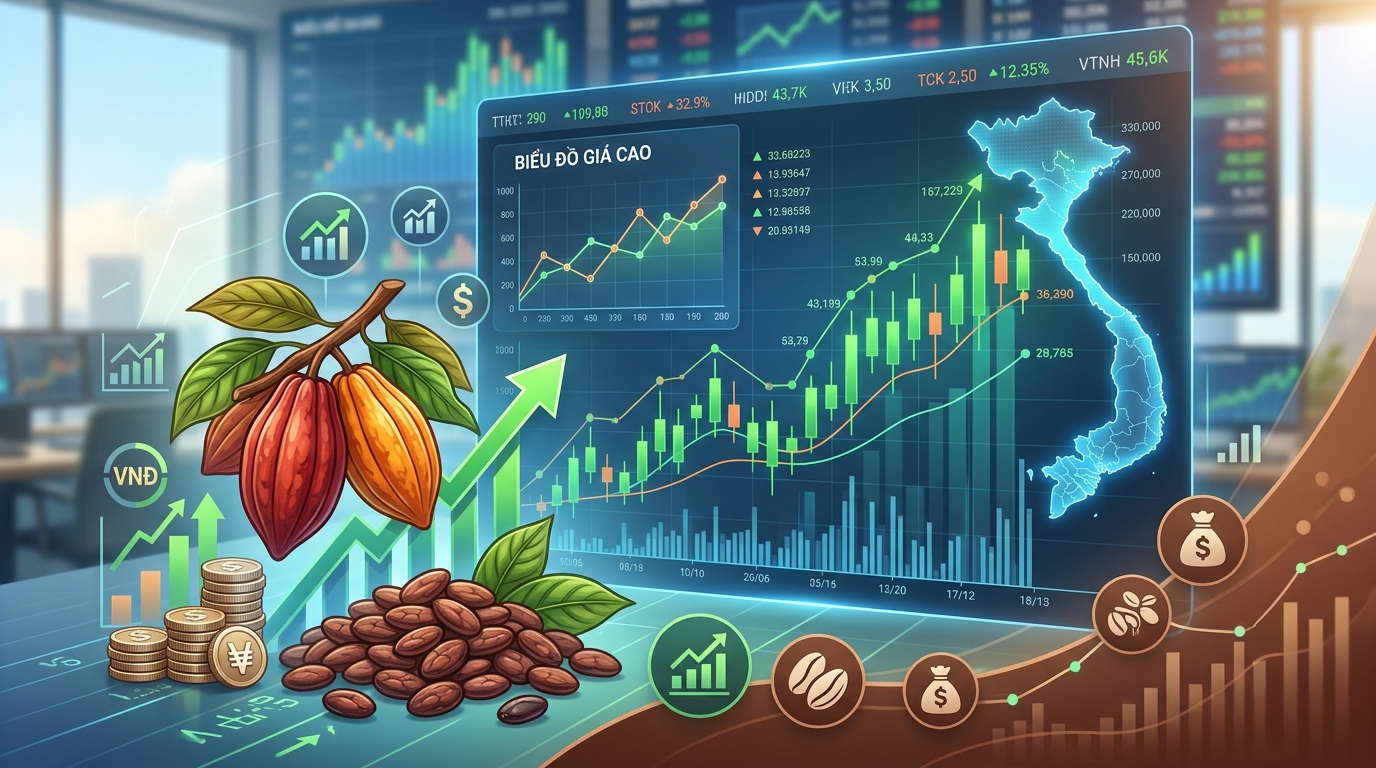
Entering August 2026, the global agricultural market in general and the Cocoa industry in particular are witnessing highly unusual developments. Following a period of extreme volatility in the first half of the year, cocoa prices are now entering a cycle that experts call a "technical lull." This article provides an in-depth analysis of the cocoa price situation in Vietnam and globally during the week of August 1 to August 31, 2026, dissecting the core causes and evaluating the macro impacts currently governing this "black gold" commodity.
1. Overview of the Cocoa Price Landscape in August 2026
Based on actual data from trading systems, cocoa prices in the early days of August 2026 are recording notable figures. Specifically, as of August 4, 2026, the listed price is temporarily standing at 0.00 USD/mt, equivalent to 0 VND/ton. This is a rare state, reflecting a temporary stagnation in spot price transactions or a strong correction from major exchanges like ICE London and New York following a period of overheating.
For a more objective perspective, we need to look at the previous month's data. The average price last month reached 4,736.44 USD/mt (approximately 124,532,375 VND/ton). Notably, within the last 30-day range, cocoa prices at one point hit a peak of 6,065.00 USD/mt (approximately 159,463,406 VND/ton). The decline from the peak of over 6,000 USD to the current stable state indicates that the market is undergoing a period of "digesting" the supply-demand shocks of the previous quarter.
In Vietnam, the price of raw cocoa in key regions such as Dak Lak, Lam Dong, and Ben Tre is also trending sideways in line with global signals. Although the international exchange listing shows a low stable level, in reality, farm-gate prices remain high because domestic supply is limited and exporters are stockpiling goods in preparation for year-end orders.
2. Analysis of the Causes of Cocoa Price Volatility
The fluctuation from the 6,065 USD level to the current stable level is not coincidental. There are three main groups of causes leading to this situation:
2.1. Correction After Excessive Speculation
In the months leading up to August 2026, the global cocoa market was pushed to record highs as financial hedge funds flocked to this commodity. When prices hit the threshold above 6,000 USD, profit-taking pressure emerged strongly. Large investors began withdrawing capital to secure profits, halting the upward momentum and pushing prices into the current deep correction state.
2.2. Harvest Situation in West Africa
Ivory Coast and Ghana—the two countries accounting for over 60% of global cocoa production—have experienced a difficult season due to Cacao Swollen Shoot Virus Disease (CSSVD) and extreme weather. However, by August 2026, initial forecasts for the upcoming Main Crop began to show more optimistic signals thanks to improved rainfall. This has eased fears of a severe supply shortage, leaving prices with no momentum to remain at peak levels.
2.3. Demand Destruction
When cocoa prices remained at excessively high levels for a long time, major global chocolate manufacturers such as Nestlé, Mondelez, and Hershey began adjusting their strategies. They reduced the cocoa content in their products, substituted it with other ingredients, or increased retail prices. The decline in consumption demand from cocoa processing plants in Europe and North America has exerted downward pressure on raw material prices, forcing them back to a more balanced range.
3. Macroeconomic Influences on Cocoa Prices During This Period
Cocoa prices are not only affected by direct supply and demand but are also strongly influenced by global macroeconomic factors. In August 2026, the following factors play a key role:
- USD Exchange Rate Volatility: Cocoa is a commodity priced in US Dollars. In the context of the US Federal Reserve (FED) making interest rate adjustments in the third quarter of 2026, the strength of the USD directly affects the cocoa import costs of other countries. When the USD is stable or slightly lower, it supports buyer sentiment, but if the USD rises, the pressure on producing countries like Vietnam will be significant.
- EU Deforestation Regulation (EUDR): By August 2026, the implementation roadmap for the EUDR has entered a decisive phase. Cocoa shipments intended for import into Europe must prove they are not linked to deforestation. This creates a price differentiation between "clean" certified cocoa and conventional cocoa. The costs of complying with this regulation are being pushed into the cost price, creating a new, higher price floor compared to historical levels.
- Transportation and Logistics Costs: Instability on vital maritime routes has not yet fully ceased. High shipping rates cause the price of cocoa delivered to the final consumer to be significantly inflated, while farm-gate prices may be squeezed to compensate for transport costs.
- Global Inflation: Although inflation has cooled compared to the 2023-2024 period, high living costs still cause consumers to tighten spending on non-essential items like premium chocolate. This is a factor hindering the long-term growth of the cocoa industry.
4. Impacts on the Vietnamese Cocoa Market
In Vietnam, although cocoa production is not as large as coffee or pepper, export value is gradually increasing. Global price fluctuations in August 2026 bring both opportunities and challenges:
For farmers: The average price last month of over 124 million VND/ton was a very attractive figure. However, the "stagnation" of prices in the first days of August has caused many farmers to feel anxious and stop selling while waiting. The fact that global prices have fallen into a stable state (or are temporarily not displaying transaction prices) makes it difficult to determine purchase prices at local agencies.
For exporters: This is a period where businesses face inventory management risks. If they import goods at the peak of 159 million VND/ton and global prices undergo a deep correction, businesses will suffer heavy losses. Therefore, the general trend this August is that Vietnamese businesses are shifting to signing futures contracts to lock in prices, rather than engaging in risky spot trading.
5. Assessment and Forecast for the End of August 2026
Looking at the data for Current Month Average Price of 0.00 USD, we can understand this as a transition period or a profound technical correction on the exchanges. However, based on the 30-day range of 0.00 - 6,065.00 USD, the market is clearly extremely sensitive.
Forecasts from now until the end of August 2026 suggest that cocoa prices are unlikely to return to the 6,000 USD peak immediately, but they will not remain at 0 USD either. It is highly likely that prices will soon re-establish around the 4,500 - 5,000 USD/mt range. This is considered a reasonable price zone, sufficient to ensure profits for growers but not so high as to stifle the demand of confectionery manufacturers.
Advice for investors and businesses:
- Monitor closely: Daily price charts need to be updated because the market is in a state of extreme "compression," and any information about weather in West Africa could trigger a new wave.
- Diversify supply sources: Vietnamese businesses should leverage the quality of Fine Flavor Cocoa to find market niches less affected by bulk commodity price fluctuations.
- Risk management: Use commodity derivatives to hedge prices in a market context with fluctuations of up to thousands of dollars in just one month.
Conclusion
August 2026 marks an important phase for the global cocoa market. The current stability following intense volatility is an opportunity for stakeholders to re-evaluate their supply chains and business strategies. Although current statistics show prices at a low equilibrium, macro factors and the actual supply situation still hold many surprises. For the Vietnamese cocoa industry, maintaining quality and complying with international regulations such as the EUDR will be the key to overcoming price waves and affirming its position on the global agricultural map.
This article provides market assessments based on available data; investors should consider carefully before making financial decisions.