 Deutsch
  English
  Español
  Français
  Bahasa Indonesia
  日本語
日本語  한국어
한국어  Nederlands
  Português
  Tiếng Việt
  中文
中文 Commodity Market Analysis Report for the week of 24/08/2026 - 30/08/2026
AI Market Digest
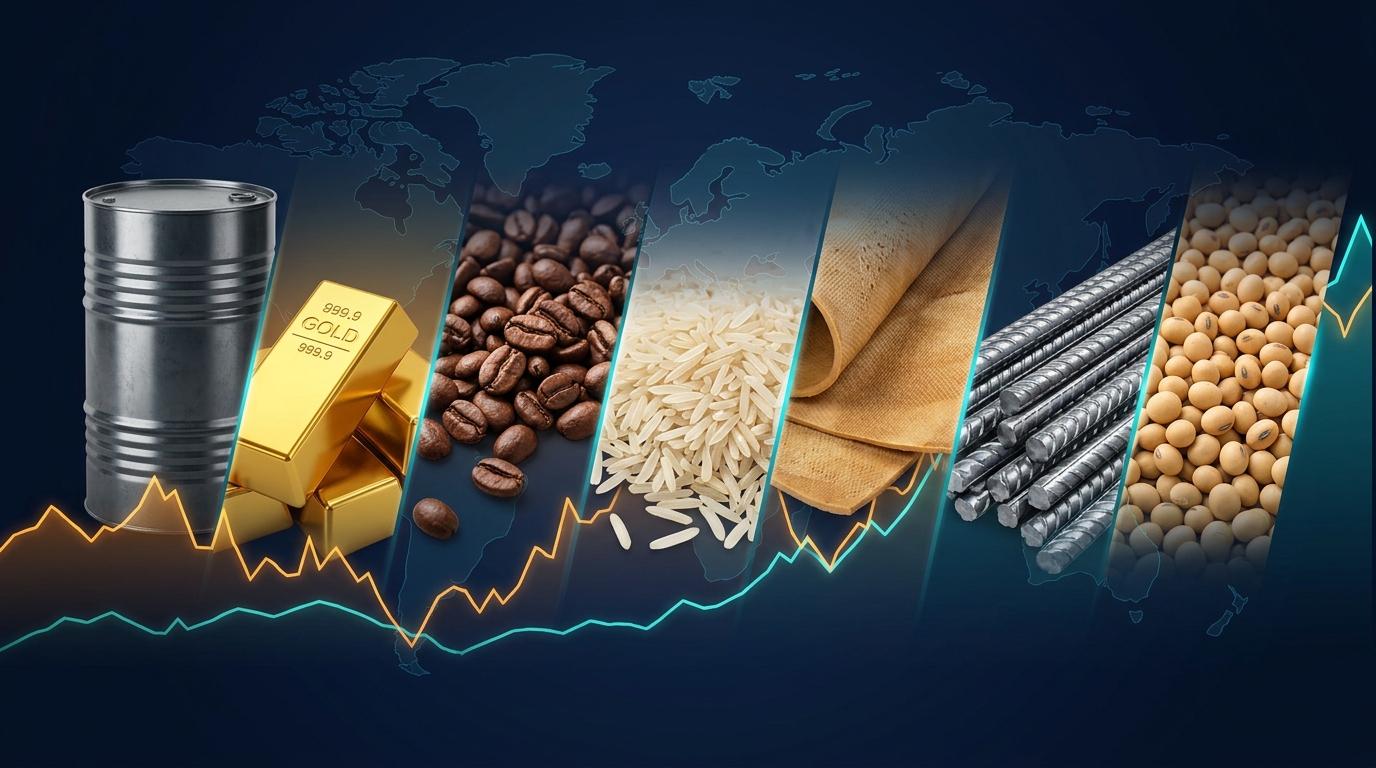
The global commodity market in the week from 24/08 to 30/08/2026 recorded complex fluctuations under the combined impact of geopolitical conflicts in Russia and severe natural disaster risks in the Asian region. The price index for energy and agricultural products faced significant pressure from attacks on Russian oil and gas infrastructure, while flash floods and glacier collapses in the Nepal-China region are threatening cross-border logistics supply chains. In Vietnam, the biggest highlight is the strong growth of seafood exports to the Chinese market, reaching a milestone of over 1 billion USD in the first 7 months of the year.
GROUP: Energy
Crude oil prices maintained a stable upward trend as Russia was forced to import jet fuel following a series of attacks on domestic refineries. At the close of the session on 30/08, Brent crude reached 88.29 USD/bbl (+0.26%), while WTI oil traded at 83.44 USD/bbl (+0.08%). The damage to refineries in Russia not only reduced global fuel supply but also altered trade flows, as a major energy exporter like Russia had to seek alternative supplies from abroad.
- Coal: Recorded the strongest increase in the group at 6.47%, reaching 139.75 USD/mt. The demand for early winter stockpiling in Europe and supply disruptions from mining regions due to extreme weather were the main causes.
- US Natural Gas: Increased slightly by 0.69% to 2.88 USD/mmbtu. Unfavorable news from Qatar - one of the world's leading LNG exporters - regarding the potential for supply disruptions through the Strait of Hormuz has caused concern for the European gas market.
Outlook: Energy prices are forecast to continue climbing next week if attacks on oil and gas infrastructure in Eastern Europe show no signs of cooling down.
GROUP: Metals
Gold continued to assert its position as a safe-haven asset by maintaining a record price of 4,454.10 USD/toz on 30/08/2026. Compared to the monthly average (4,398.49 USD), gold prices have increased by more than 3%, equivalent to approximately 140 million VND/tael. Concerns about a "global catastrophe" and the risk of nuclear war, as mentioned in recent news, have driven strong capital flows into precious metals.
- Silver and Platinum: Fluctuated slightly at 66.15 USD/toz (+0.45%) and 1,833.60 USD/toz (+1.09%) respectively.
- Industrial metals: Copper (654.33 UScents/lb) and Zinc (3,857.80 USD/mt) rose slightly due to expectations of production recovery in China, despite risks of natural disasters in the western part of the country.
Outlook: The precious metals group will maintain its upward momentum in the short term due to macroeconomic instability, while base metals will depend heavily on China's production data next week.
GROUP: Agricultural Products
Wheat and soybean oil prices recorded significant increases over the past week due to concerns about food security and supply chain disruptions in Europe. Specifically, wheat rose sharply by 3.30% to 783.50 UScents/bu, while soybean oil increased by 3.47% to reach 70.99 UScents/lb. Belgium's move to block attempts to seize Russian assets has created further legal and trade tensions, indirectly affecting the flow of agricultural products from the Black Sea region.
- Rubber: Traded at 239.00 JPY/kg (+1.14%). Demand from the electric vehicle industry (such as new models from Honda or Jaecoo) is supporting stable rubber prices.
- Arabica Coffee: Reached a high of 312.42 UScents/lb; although slightly lower than the monthly average, it remains at a historical threshold due to concerns that climate change is affecting key growing regions.
- Rice: International rice prices rose 1.72% to 15.10 USD/CWT. In Vietnam, although data for 30/08 has not yet updated the latest prices, the general trend remains positive thanks to import demand from traditional partners.
Outlook: Natural disasters in Nepal and China (glacier collapses, flash floods) may hinder the road transport of agricultural products; prices for essential goods are expected to continue to fluctuate upward.
GROUP: Food
The food market witnessed a breakthrough for the Vietnamese seafood industry as China spent over 1 billion USD on imports in the first 7 months of 2026. Chinese consumers are showing a willingness to pay more for quality products from Vietnam, despite domestic economic difficulties. This creates positive sentiment for domestic shrimp and pangasius exporters.
- Pork: Global prices reached 81.90 USD/lbs (+1.71%), reflecting the recovery in red meat consumption in major markets.
- Beef and Chicken: Maintained stability with a slight increase of less than 0.3%. News regarding the "injustice of Indian buffalo" also attracted attention, indicating stricter quarantine and food origin requirements in the Vietnamese market.
Outlook: Food prices will remain stable, however, rising transport costs due to energy prices may push retail prices higher in the coming period.
Commodities with the strongest fluctuations of the week
Coal and Sugar are the two commodities with the most distinct breakthroughs in this week's tracking portfolio. Coal surged 6.47% due to supply risks and concerns about energy infrastructure being attacked in Eastern Europe. Sugar also recorded a 3.62% increase (reaching 17.55 UScents/lb) due to negative weather forecasts in top exporting countries, combined with high logistics costs.
Forecast and recommendations for next week (31/08/2026 - 06/09/2026)
Trend forecast: The commodity market in the first week of September will be under significant pressure from non-economic factors. Crude oil and Gas prices are expected to rise if tensions in the Middle East (related to Qatar) and Russia continue to escalate. Gold remains the preferred channel for institutional investors as geopolitical risks show no signs of cooling down.
Recommendations:
- For exporters: Seize opportunities from the Chinese market for the seafood sector, while also needing to lock in transport costs early to avoid the risk of sharp oil price fluctuations.
- For investors: Be cautious with buying positions in the agricultural group (wheat, soybeans) as prices are already at high levels and are directly affected by financial sanctions between the EU and Russia.
- Risk factors to monitor: Flooding in Nepal-China may cause disruptions in the supply chain of components and raw materials; developments in energy infrastructure attacks in Russia.
Dit inzicht delen: