 Deutsch
 English
 Español
 Français
 Bahasa Indonesia
 日本語
 한국어
 Nederlands
 Português
 Tiếng Việt
 中文
Rice Market in October 2026: Supply Pressures Push Price Levels to New Record Highs
AI Report · Rice
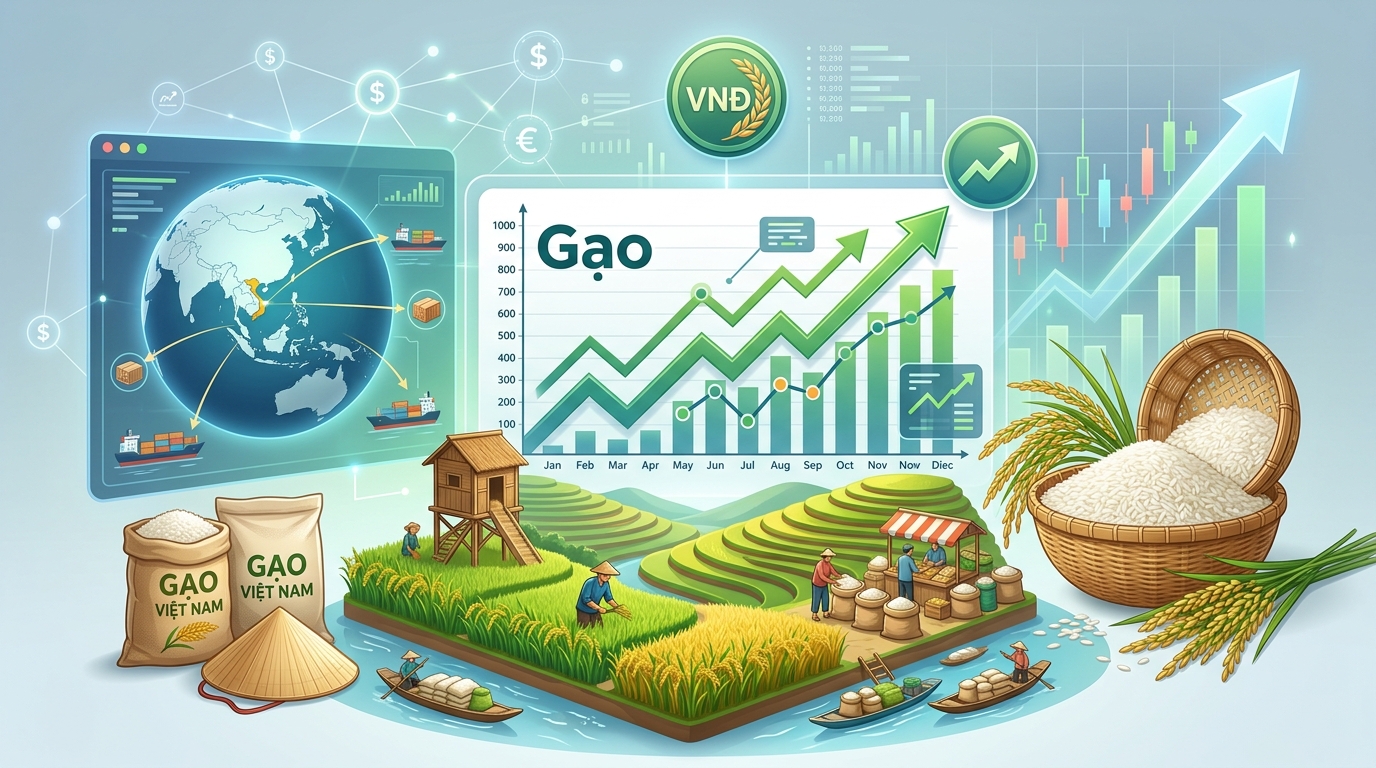
The global agricultural market in October 2026 witnessed dramatic shifts, with rice remaining the focal point for international investors and traders. Entering the final week of October (from October 1, 2026, to October 31, 2026), rice prices internationally established a solid high-price floor, reflecting complex supply-demand fluctuations and profound macroeconomic variables. Trading data recorded on October 29, 2026, showed rice futures anchored at 17.39 USD/CWT (equivalent to approximately 9,903,956 VND/ton), maintaining a steady upward momentum and closing out a month of volatile growth.
Overview of the Rice Price Landscape in October 2026: Consolidation of the Upward Trend
Looking back at the entire trading cycle in October 2026, the global rice market experienced a strong recovery and breakthrough compared to the previous month. The price range over the past 30 days was quite broad, hitting a floor of 16.10 USD/CWT (approximately 9,168,705 VND/ton) before reaching a peak of 17.62 USD/CWT (equivalent to 10,034,945 VND/ton).
The average price for October 2026 reached 17.02 USD/CWT (approximately 9,693,233 VND/ton), a sharp increase of 8.06% compared to the average of 15.75 USD/CWT (approximately 8,969,943 VND/ton) in September 2026. The final days of trading, from October 20 to October 29, recorded surprising stability around the 17.02 – 17.52 USD/CWT range, indicating that seller sentiment remained unshaken by short-term technical adjustment pressures. A slight increase of +0.058% on October 29 further reinforced the short- and medium-term bullish outlook for this essential grain.
Market Developments in Vietnam and Key Exporting Countries
In Vietnam, domestic market sentiment in the Mekong Delta rice bowl closely tracked international trends. Although the Autumn-Winter crop is in full harvest, there was no sign of panic selling. On the contrary, fresh paddy prices in the field remained high due to strong procurement demand from major export enterprises.
- Vietnam's 5% broken rice: Average export offer prices were anchored at 535 – 545 USD/ton. Stable import demand from traditional markets like the Philippines and Indonesia kept prices from falling deeply as new supply hit the market.
- High-quality fragrant rice (ST24, ST25, Jasmine): Premium rice segments continued to face shortages, with prices maintained at over 650 – 720 USD/ton depending on the variety, driven by orders preparing for the year-end festive season in developed markets such as Europe, the US, and the Middle East.
- Context of competitor nations: Thailand faced rising production costs and a strengthening Baht at times, which reduced the price competitiveness of its rice exports. Meanwhile, although India has gradually relaxed export restrictions on certain segments, caution in national food reserve policies in the face of climate change meant that the actual volume of goods released to the global market was not as abundant as initially expected.
Analysis of Causes Leading to the Price Increase in October 2026
The climb in rice prices from the 15.75 USD level to over 17 USD/CWT in October was not a random phenomenon, but a synthesis of various global supply-demand factors:
1. Production Decline Due to Extreme Weather
The year 2026 witnessed anomalous fluctuations in weather cycles. Unusual heavy rains in key cultivation areas in Southeast and South Asia during the flowering stage reduced late-crop yields. Concerns over grain quality and a decline in the recovery rate of finished rice stimulated traders to increase stockpiling right from the beginning of the season.
2. Surge in Import Demand in the Final Quarter
October is typically the time when importing nations review quotas and boost food security stockpiles for the winter and the upcoming Lunar New Year holiday. The Philippines – the world's leading rice importer – continued to disburse new import tenders to replenish strategic inventories. Additionally, African countries accelerated contract signings due to concerns over rising ocean freight rates toward the end of the year.
3. High Input Costs Maintained
Although fertilizer prices have cooled somewhat compared to previous peaks, costs for labor, fuel for agricultural machinery, and post-harvest rice drying in specialized farming regions all recorded increases of 5 - 10%. This directly raised the production cost floor, forcing traders and agents to push wholesale prices higher to preserve profit margins.
Impact of Macroeconomic Factors on the Rice Market
The agricultural market cannot be separated from the currents of the global macroeconomy. In October 2026, three prominent macroeconomic factors directly impacted the trajectory of rice prices:
Monetary Policy and Exchange Rates: The USD continued to fluctuate within an unpredictable range as major central banks entered a period of interest rate adjustments. The volatility of the USD/VND exchange rate directly affected the calculations of Vietnamese import-export businesses. With the converted price anchored at approximately 9,903,956 VND/ton on October 29, exporters had a certain advantage in converted revenue but faced pressure regarding the cost of imported raw materials and logistics paid in foreign currency.
Logistics Costs and Supply Chains: International ocean freight rates in October tended to edge up slightly due to the shifting of international maritime trade routes and crude oil prices fluctuating around new benchmarks. A local shortage of empty containers at several key Southeast Asian export ports pushed insurance and shipping costs higher, indirectly adding to the futures rice price (CWT) on international exchanges.
Food Inflation and National Security Issues: While global inflation is controlled at a moderate level, food inflation remains highly sensitive. To protect the purchasing power of citizens and limit the risk of social instability, many countries have chosen to subsidize food imports or establish emergency reserves. This defensive demand creates a solid "cushion," neutralizing any efforts to force a deep correction in international rice prices.
Outlook and Recommendations for Market Participants
Looking ahead to November and December 2026, the upward momentum of rice prices may face psychological resistance around the 17.80 - 18.00 USD/CWT range as the Winter-Spring crop supply prepares to enter the planting phase. However, the possibility of prices returning to the old floor of 15.75 USD/CWT is very low in the context of global reserves remaining thin.
To optimize business opportunities and hedge against price volatility risks during this sensitive period, relevant entities should note:
- For export enterprises: It is necessary to apply flexible sales strategies, limiting the signing of long-term futures contracts without corresponding supply-guarantee contracts. Prioritize signing FOB contracts with freight escalation clauses to minimize the risk of volatile shipping rates.
- For cooperatives and farmers: Maintain close links with the business consumption chain, focusing on improving grain quality rather than just chasing volume. Compliance with safety standards for pesticide residues will help Vietnamese rice maintain good selling prices in demanding markets like the EU and Japan.
- For commodity investors: It is necessary to closely monitor the next World Agricultural Supply and Demand Estimates (WASDE) reports, as well as any moves by the Indian government regarding stock releases or tax imposition, as these will be the triggers for strong volatility in rice futures in the fourth quarter of 2026.
In summary, October 2026 closed with an optimistic picture for commercial rice prices. Anchoring the price at 17.39 USD/CWT at the end of the month shows that rice is being repriced at a new position, affirming the vital role of this essential commodity in a global food security landscape that still contains many uncertain colors.