 Deutsch
  English
  Español
  Français
  Bahasa Indonesia
  日本語
日本語  한국어
한국어  Nederlands
  Português
  Tiếng Việt
  中文
中文 Commodity Market Week 01/06/2026 - 07/06/2026: Geopolitical heat drives energy and precious metals prices higher
AI Market Digest
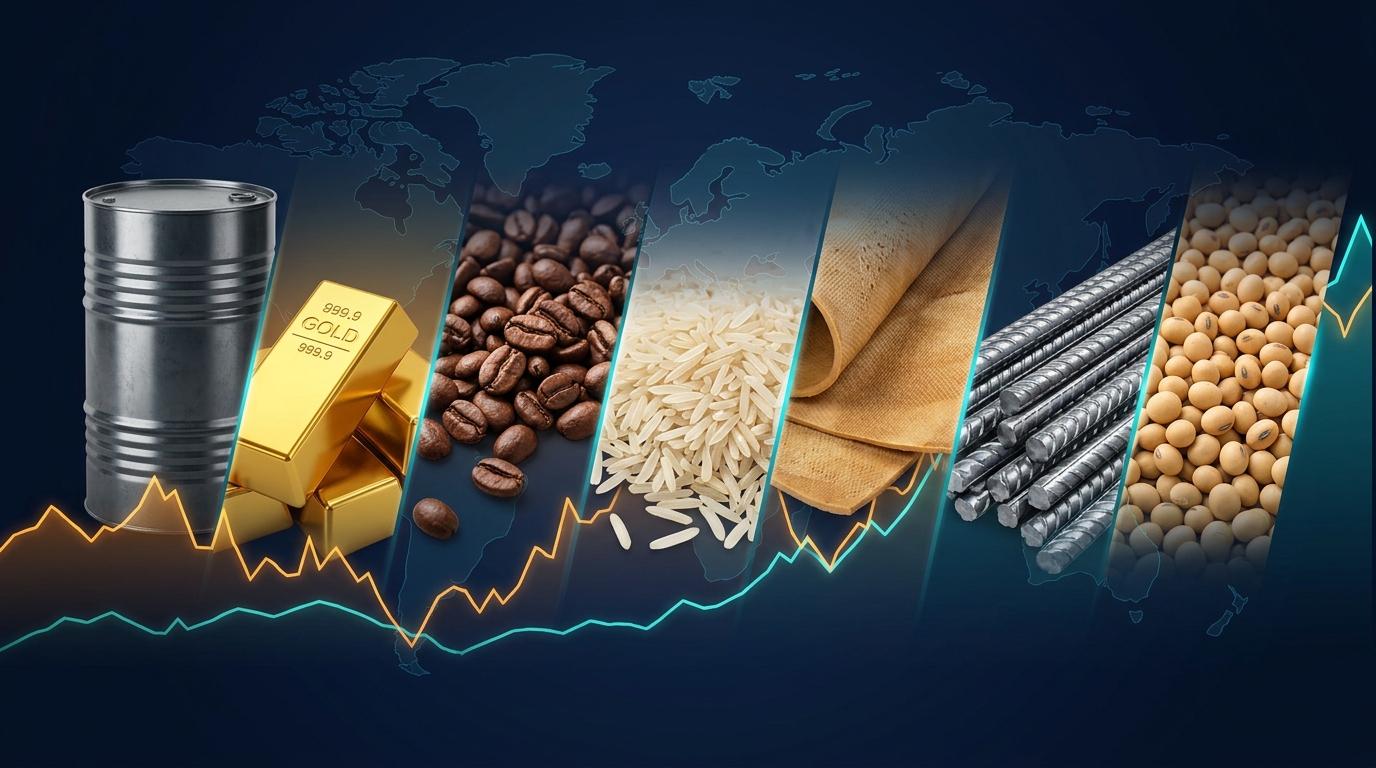
The commodity market overview for this week recorded mixed fluctuations, though with a clear upward trend across essential commodity groups. Amidst a complex global geopolitical landscape—particularly reports of a "new crisis" in Iran and the deployment of military robots on the Ukraine-Russia front lines—investor sentiment has shifted strongly toward safe-haven assets. Furthermore, news regarding the health of U.S. leadership and political scenarios in Russia has created an atmosphere of uncertainty, fueling gold, silver, and crude oil prices to maintain steady growth throughout the past week.
GROUP: Agricultural Products
The agricultural market from 01/06 to 07/06 witnessed a slight recovery in most major commodities, led by industrial raw materials and grains.
- Cocoa: The strongest performer in the group with a 5.12% increase, closing the session on 07/06 at 3,762.00 USD/mt (approximately 99 million VND/ton). Although the current price remains below the monthly average (3,889.29 USD), this recovery indicates localized supply constraints.
- Rubber: Prices remained stable at 230.40 JPY/kg, up 1.71%. In Vietnam, raw material regions are closely monitoring these developments to adjust harvesting plans.
- Arabica Coffee: Fluctuations were negligible, with a slight increase of 0.26% to 246.50 UScents/lb.
- Grains: Soybean oil rose 2.84% to reach 74.12 UScents/lb, while corn and soybean meal also recorded gains of 1.65% and 1.66%, respectively.
Causes: The slight rise in agricultural prices is primarily due to higher logistics and input energy costs. Notably, reports of Switzerland testing the recycling of urine into fertilizer highlight efforts to find alternative sources as chemical fertilizers are impacted by the Russia-Ukraine conflict, a nation that is a leading fertilizer exporter.
Outlook for next week: The agricultural group is expected to continue trading sideways or rising slightly due to cost-push inflationary pressures. Investors should pay close attention to weather developments in key growing regions.
GROUP: Metals
The precious metals group had an explosive week as capital fled from risky investment channels in search of a safe haven.
- Gold: Rose sharply by 3.21%, reaching 4,331.00 USD/toz, equivalent to approximately 137.48 million VND/tael. News regarding the health of U.S. President Biden and the potential for President Putin's extended rule has created macroeconomic instability, directly supporting gold prices.
- Silver: Recorded a surge of 8.86%, reaching 67.30 USD/toz. This was the best-performing commodity in the metals portfolio this week.
- Base Metals: In contrast to precious metals, Copper and Platinum trended slightly downward despite positive percentage fluctuations (Copper at 625.23 UScents/lb). This reflects concerns that slowing global economic growth will reduce industrial consumption demand.
Vietnam Context: In the domestic market, major infrastructure projects such as the Van Cao - Hoa Lac Metro or the Da Nang airport tunnel, which have been proposed for implementation, will serve as long-term drivers for steel and copper demand, even if global prices see short-term corrections.
GROUP: Energy
Global energy prices remained in the green over the past week as supply risks from the Middle East resurfaced.
- Brent Crude Oil: Rose 2.04%, reaching 93.09 USD/bbl (approximately 2.45 million VND/barrel).
- WTI Crude Oil: Rose 2.69%, reaching 90.54 USD/bbl.
- US Natural Gas: Rose sharply by 3.21%, reaching 3.23 USD/mmbtu.
- Coal: Rose slightly by 0.81% to 148.75 USD/mt.
Causes: Reports of Iran facing a "new crisis" and ongoing tensions in the Strait of Hormuz are the primary factors preventing oil prices from falling significantly. Additionally, the deployment of U.S. humanoid robots to the Ukraine-Russia front lines suggests that the scale of the conflict could escalate, threatening energy infrastructure in Europe.
GROUP: Food
The food market recorded relative stability; however, market sentiment was affected by financial scandals.
- Pork: Rose 1.05% to 94.30 USD/lbs.
- Beef: Maintained at 353.80 BRL/kg, up slightly by 0.09%.
Notable event: A Ponzi scheme involving a "ghost herd" of 80,000 cattle that misappropriated 170 million USD has shocked the global livestock industry. This incident serves as a warning to banks and investors regarding the risks of appraising agricultural commodities as collateral, which may lead to tighter credit for the agricultural sector in the near future.
Most notable commodities of the week
1. Silver (+8.86%): Strongest growth due to safe-haven demand and speculation as political volatility in the U.S. and Russia increases.
2. Cocoa (+5.12%): Continued its strong recovery, reflecting supply-demand imbalances that have not yet been thoroughly resolved.
3. Gold: Surpassed the 4,300 USD/toz threshold, affirming its position as an optimal asset amid negative news regarding the health of world leaders and high-tech (robotic) military conflicts.
Forecast and recommendations for next week (08/06/2026 - 14/06/2026)
Trend forecast:
- Energy: Expected to remain at high levels. Brent oil may test the 95 USD threshold if the situation in Iran does not improve.
- Precious Metals: Gold and Silver still have room to grow as geopolitical risks remain present. However, profit-taking pressure may emerge by mid-week.
- Agricultural Products: Rice and grain prices may fluctuate as maritime transport costs rise in tandem with oil prices.
Risk factors to monitor:
- Warfare: The intervention of robotic technology in Ukraine could change the landscape and create new shocks for the commodity market.
- Policy: Moves from Iran and new U.S. sanctions against involved nations.
- Vietnam Market: Investors should be cautious of "virtual land fevers" driven by infrastructure planning (as warned by the Hanoi Police) and focus capital on commodity channels with higher liquidity and greater transparency.
Recommendation: Investors should maintain a proportion of safe-haven assets (gold) and closely monitor crude oil futures contracts. For manufacturing enterprises, it is advisable to consider locking in raw material purchase rights early to avoid the risk of price increases from logistics costs.
Share this insight: