 Deutsch
  English
  Español
  Français
  Bahasa Indonesia
  日本語
日本語  한국어
한국어  Nederlands
  Português
  Tiếng Việt
  中文
中文 Commodity Market Summary Report for the Week of 07/09/2026 - 13/09/2026
AI Market Digest
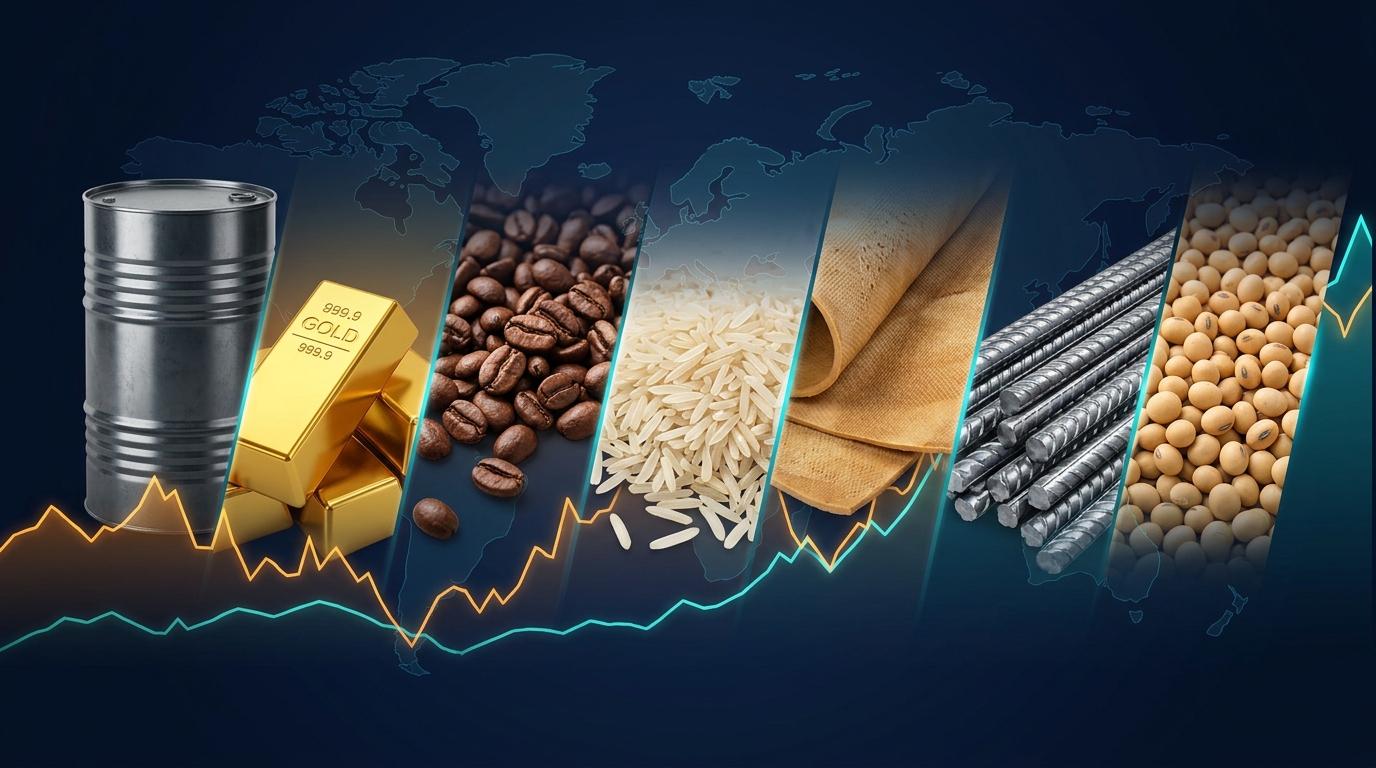
The global commodity market during the week of 07/09/2026 to 13/09/2026 witnessed a strong divergence across sectors, directly impacted by geopolitical instability in the Middle East and fluctuations in the USD. While energy and precious metal prices trended upward due to concerns over supply disruptions in the Strait of Hormuz, the agricultural sector recorded relative stability with a few bright spots in sugar and soybeans.
SECTOR: Energy
Crude oil prices recorded a positive week of growth, particularly WTI oil, which rose by 2.76% to close at 100.05 USD/bbl on 13/09/2026. Brent oil also maintained a slight upward momentum of 0.18%, reaching 104.61 USD/bbl (equivalent to approximately 2,711,753 VND/barrel). Natural gas in the US remained stable at 2.83 USD/mmbtu (+0.39%).
- Causes: Escalating tensions in the Strait of Hormuz following the incident where an Iranian commercial vessel was struck by an unidentified object, causing casualties, and attacks by Houthi forces in Yemen have pushed transport risks higher. Additionally, the fact that Russia's Arctic LNG 2 project has doubled its production despite sanctions indicates that the pivot of energy flows toward Asia, particularly China, is occurring strongly.
- Outlook for next week: Energy prices are forecast to remain sensitive to news from the Middle East. If the situation in Hormuz does not de-escalate, Brent oil could test the 110 USD/bbl mark.
SECTOR: Metals
The precious and industrial metals market maintained a green trend amid signs of a rebound in the USD and the signing of strategic supply agreements. Gold prices reached 4,350.40 USD/toz (+0.83%), equivalent to approximately 135.96 million VND/tael. Silver rose strongly by 1.21% to 64.27 USD/toz. In the base metals group, Copper rose slightly by 0.37% to 646.95 UScents/lb, while Aluminum increased by 0.7% to reach 3,256.70 USD/mt.
- Causes: In Vietnam, the event where Chairman Tran Dinh Long (Hoa Phat) hosted and signed a deep-cooperation agreement with Vale Group (the world's largest iron ore producer) is a significant signal for the domestic steel supply chain. This helps ensure a stable source of raw materials for the mega-infrastructure projects currently underway. Furthermore, safe-haven sentiment in the face of geopolitical risks continues to support gold prices.
- Outlook for next week: Metal prices may face short-term downward pressure if the USD/VND exchange rate and the DXY index rise sharply as forecast by Citi. However, demand from major public investment and real estate projects (such as Vingroup's 10 billion USD mega-project) will support domestic industrial metal prices.
SECTOR: Agriculture
Sugar and soybean prices were the two most notably volatile commodities in the agricultural sector last week. World sugar rose sharply by 3.2%, reaching 18.15 UScents/lb (approximately 10.37 million VND/ton). Soybeans also recorded a 1.21% increase, closing the week at 1,280.30 UScents/bu. Other commodities such as Rubber (249.90 JPY/kg), Arabica Coffee (285.70 UScents/lb), and Corn (510.25 UScents/bu) maintained stability with increases of less than 1%.
- Causes: The stability of agricultural prices occurred in the context of a shift in land use in the Vietnamese domestic market. The conversion of over 1 hectare of agricultural land by Pi Group into the An Phu urban area reflects a trend of urbanization that is gradually narrowing traditional cultivation areas, which could put pressure on domestic agricultural supply in the long term.
- Outlook for next week: Sugar prices may continue their upward trend due to weather concerns in key growing regions. Arabica coffee prices are expected to fluctuate around the monthly average (292.55 UScents) as there are no further breakthrough signals from Brazilian supply.
SECTOR: Food
The food market recorded low volatility, indicating that supply is meeting consumer demand well. Beef closed at 349.50 BRL/kg (+0.33%), while pork reached 81.53 UScents/lbs (+0.12%). Chicken rose slightly by 0.26% to 7.76 BRL/kg.
- Causes: The slight increase in animal feed costs (soybeans, corn) was not enough to create upward price pressure on finished meat products this week. Management processes for 5-star resorts and high-end services in Vietnam (such as Rixos Phu Quoc) are driving demand for high-quality food, but this consumption volume is not large enough to impact the overall global price index.
- Outlook for next week: Food prices are forecast to remain flat. Livestock enterprises should closely monitor soybean prices as this commodity is showing a slight upward trend again.
Most notable commodities of the week
- Sugar (+3.2%): The strongest growing commodity in the agricultural sector, reflecting tightening global supply.
- WTI Crude Oil (+2.76%): Responded sensitively to geopolitical risks in the Strait of Hormuz and attacks in the Middle East.
- Gold (4,350.40 USD/toz): Continued to maintain its historical price range, reflecting investor anxiety in the face of complex macroeconomic and geopolitical fluctuations.
Forecast and recommendations for next week (14/09/2026 - 20/09/2026)
Trend forecast: The commodity market next week will enter a sensitive phase as the USD exchange rate is likely to rebound, which usually puts downward pressure on USD-denominated commodities. However, the Energy and Precious Metals sectors will still maintain a high price floor because conflicts in the Middle East show no signs of cooling down.
Risk factors to monitor:
- Geopolitics: Maritime security in the Strait of Hormuz and the US response to Houthi attacks.
- Finance: Fluctuations in the USD/VND exchange rate and interest rates from major central banks could reverse investment capital flows into commodities.
- Domestic: The progress of construction on mega-projects by Sun Group and Vingroup will be the main driver for the construction commodity group (steel, cement) in the Vietnamese market.
Recommendation: Enterprises importing raw materials (especially soybeans and metals) should consider locking in contracts early to avoid exchange rate risks. Precious metal investors should be cautious at the current price range and closely monitor statements regarding international monetary policy.
Share this insight: