 Deutsch
  English
  Español
  Français
  Bahasa Indonesia
  日本語
日本語  한국어
한국어  Nederlands
  Português
  Tiếng Việt
  中文
中文 Commodity Market Summary for the Week of July 13, 2026 – July 19, 2026: Energy "Surges" Amid Geopolitical Volatility
AI Market Digest
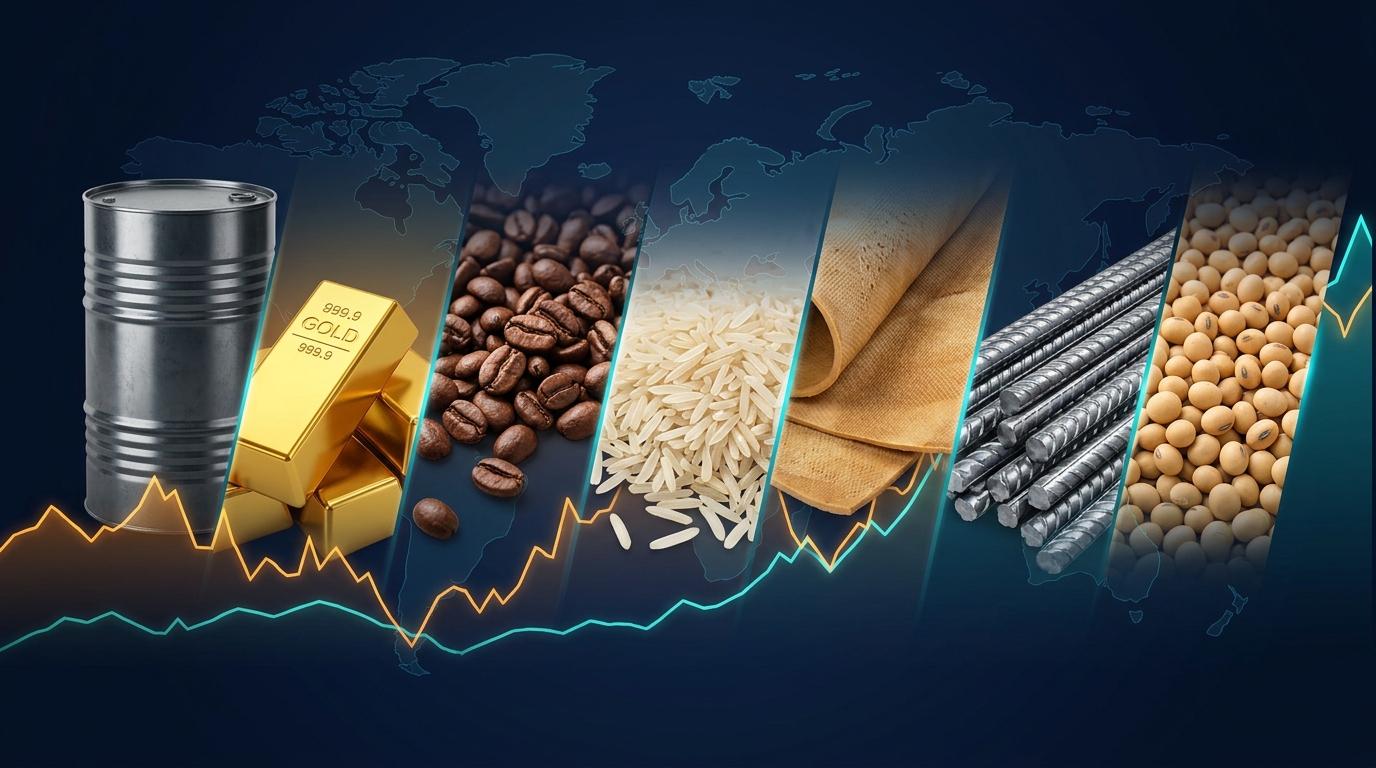
The global commodity market during the week of July 13 to July 19, 2026, witnessed a strong divergence, centered on the explosion of the energy sector and the relative stability of metals and agricultural products. The global geopolitical landscape became extremely tense as attacks on oil infrastructure in Russia and U.S. airstrikes in Iran pushed crude oil prices up by more than 4%. Meanwhile, in the Vietnamese market, developments regarding administrative tax violations by major enterprises such as Kinh Bac (KBC) and key transport infrastructure projects are attracting the attention of investors.
SECTOR: Energy
Crude oil prices recorded their strongest weekly growth in many months due to concerns over supply chain disruptions in key regions. Specifically, Brent crude rose by 4.59%, closing the session on July 19 at 88.10 USD/bbl (approximately 2,316,167 VND/barrel). WTI crude followed closely with a 4.48% increase, reaching 82.49 USD/bbl. US natural gas rose slightly by 1.85% to 2.91 USD/mmbtu.
Main causes: This upward momentum was driven directly by news of Ukraine attacking three oil depots deep within Russian territory, directly threatening Moscow's export capacity. Simultaneously, U.S. airstrikes in Iran sparked fears of an all-out war in the Strait of Hormuz—the "chokepoint" of the global oil industry. These events have left the market concerned about a "huge bill" that global consumers will have to bear in the near future.
Outlook for next week: Oil prices are likely to remain high, above 85 USD/bbl, if conflicts in the Middle East and Eastern Europe show no signs of cooling down. Investors should pay close attention to retaliatory moves from Iran.
SECTOR: Metals
The precious and industrial metals market maintained a slight green hue, acting as a safe haven amid instability. Global gold closed the week at 4,016.90 USD/toz (equivalent to 127,322,794 VND/tael), up 1.02%. Copper rose 1.26% to 627.00 UScents/lb. Other metals such as Zinc (+1.58%) and Platinum (+1.46%) also recorded stable gains.
Main causes: Escalating geopolitical tension is the primary driver pushing capital flows into gold. For industrial metals like copper and zinc, information regarding major infrastructure projects in Vietnam (such as the two expressways by the T&T and Son Hai consortium) and the implementation of the Ngu Phuc Industrial Park (over 5.6 trillion VND) in Hai Phong shows that demand for construction materials remains positive in Southeast Asia.
Outlook for next week: The precious metals group will continue to be sensitive to inflation indices and fluctuations in the USD. Copper prices may trade sideways as the Chinese market continues to face structural demographic and economic issues (such as the closure of 30,000 schools).
SECTOR: Agricultural Products
Agricultural prices fluctuated in opposite directions within a narrow range, with the exception of a breakout in Cocoa. Cocoa recorded an impressive 6.08% increase for the week, reaching 5,533.00 USD/mt. Arabica coffee remained high at 320.30 UScents/lb (+2.46%). Essential food commodities such as Soybeans (+0.8%), Corn (+0.74%), and Wheat (+1.19%) saw negligible changes.
Main causes: Cocoa prices rose sharply due to concerns over supply from West Africa that have yet to be fully resolved. For wheat and corn, despite slight increases, pressure from military personnel instability in Ukraine (one of the world's largest wheat granaries) is creating potential risks for the Black Sea grain corridor.
Outlook for next week: The agricultural sector may face slight downward pressure if weather conditions in major farming regions in the U.S. and Brazil improve. However, coffee prices will be difficult to push down significantly as sea freight costs are trending upward in line with oil prices.
SECTOR: Food
Prices for livestock food commodities maintained a stable trend with slight increases ranging from 0.7% to 1.4%. Lean Hogs rose 1.37% to 101.65 USD/lbs. Beef and poultry increased by 0.71% and 0.82%, respectively, compared to the previous week.
Main causes: The rise in crude oil prices and logistics costs (related to news of increased flight routes to Japan and South Korea) indirectly impacted global food prices. In Vietnam, consumer demand remains stable; however, businesses should note the risk of rising costs for imported animal feed (soybeans, corn), which are trending slightly upward.
Most Notable Commodities of the Week
- Crude Oil (Brent & WTI): The strongest gainers in the energy sector (>4.5%) due to direct attacks on energy infrastructure in Russia and military threats in the Strait of Hormuz.
- Cocoa: Surged 6.08%, continuing to be the commodity with the strongest price volatility in the agricultural sector due to tightened global supply.
- Gold: Surpassed the 4,000 USD/toz threshold, affirming its position as the number one safe-haven asset as war risks spread.
Forecast and Recommendations for Next Week (July 20, 2026 – July 26, 2026)
Trend Forecast:
- Energy: Expected to continue maintaining upward momentum or trade sideways in the high price range. The biggest risk is transport disruption in the Middle East.
- Metals: Gold may face short-term profit-taking pressure, but the general trend remains upward. Base metals will depend on new economic stimulus packages from China.
- Agricultural Products: Coffee and cocoa prices are forecast to remain anchored at high levels due to climate change and logistics issues.
Recommendations for Vietnamese Businesses and Investors:
- Transport and Manufacturing Businesses: Need to proactively prepare contingency plans for fuel costs as Brent oil prices approach the 90 USD/bbl range.
- Industrial Real Estate Investors: Closely monitor developments at industrial parks such as Ngu Phuc or projects by KBC following administrative penalties to reassess cash flow and project progress.
- Import-Export Businesses: Pay attention to exchange rate fluctuations and international shipping costs, which are escalating due to the war situation on key maritime routes.
Information summarized based on market data and geopolitical events as of the morning of July 20, 2026. Investors should consider carefully before making decisions.
Share this insight: