 Deutsch
  English
  Español
  Français
  Bahasa Indonesia
  日本語
日本語  한국어
한국어  Nederlands
  Português
  Tiếng Việt
  中文
中文 Commodity Market Summary Report for the Week of May 11, 2026 - May 17, 2026
AI Market Digest
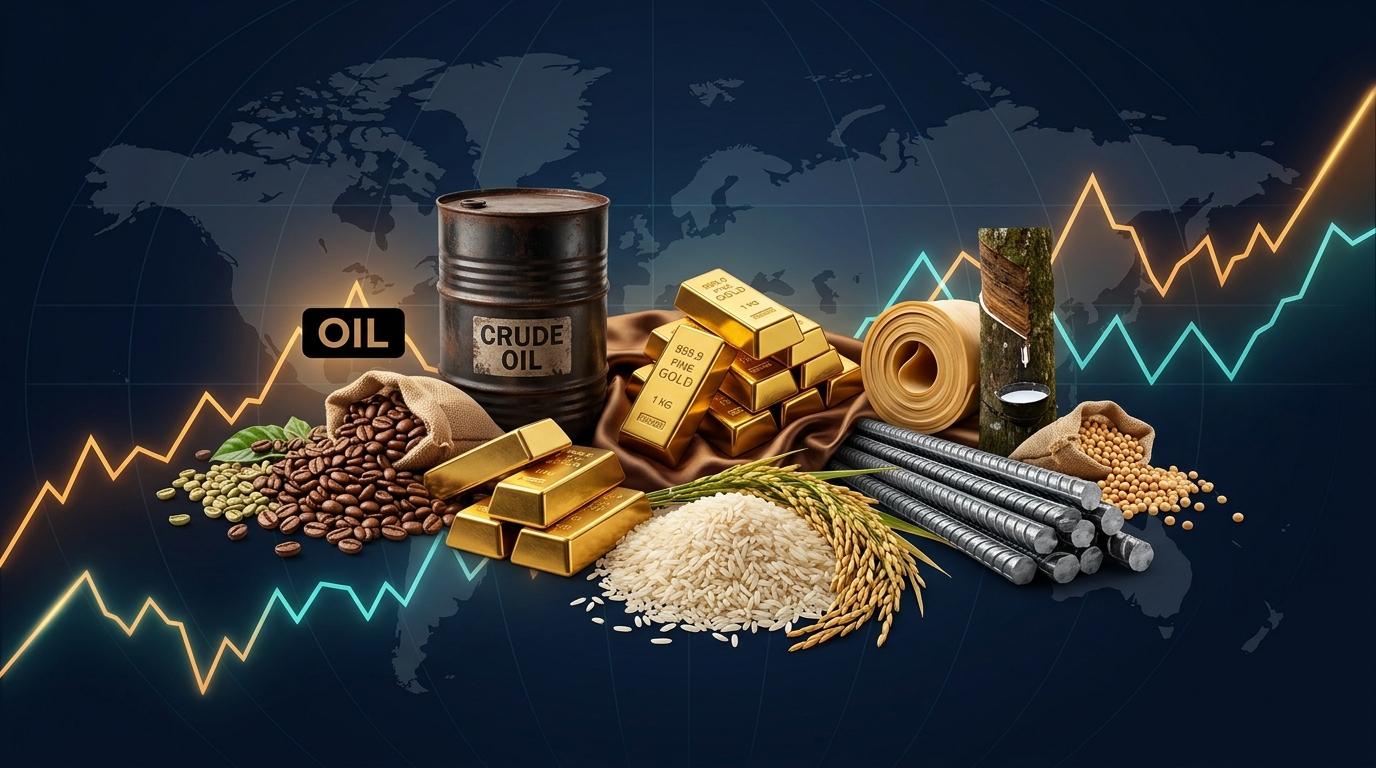
The global commodity market in the week from May 11 to May 17, 2026, recorded significant volatility, primarily driven by pressure from geopolitical hotspots and shifts in global trade policies. The focus of the past week was the escalating tension in the Strait of Hormuz as Iran threatened to use a "new weapon" capable of paralyzing trade flows between Asia, Europe, and Africa, alongside the largest attack on the Russian capital, Moscow, in a year. These events pushed energy and precious metal prices to surge, while the agricultural sector also faced pressure from supply chain risks and climate change.
GROUP: Energy
Crude oil and natural gas prices rose sharply over the past week due to concerns regarding supply disruptions in key regions. WTI crude oil led the gains with a 4.2% increase, closing the session on May 17, 2026, at 105.42 USD/bbl (approximately 2,778,059 VND/barrel). Brent crude also rose 3.35%, reaching 109.26 USD/bbl.
- Causes: News of Iran preparing to deploy a new "weapon" in the Strait of Hormuz created extreme anxiety in the global energy market. Iran's control over the "switch" at this vital oil transport route has made the risk of supply shortages more tangible than ever. Simultaneously, attacks deep within Russian territory have raised concerns about the stability of energy infrastructure in Eastern Europe.
- Natural Gas: US natural gas rose 2.28% to 2.96 USD/mmbtu, reflecting increased storage demand amid instability.
- Outlook for next week: Energy prices are forecast to remain high and sensitive to military updates from the Middle East and Russia.
GROUP: Metals
Precious metals became a safe haven as geopolitical risks increased, while industrial metals showed mixed performance. Silver was the top performer in the group with a +9.18% gain, reaching 75.75 USD/toz on May 17, 2026. Gold also maintained a steady upward trend of +2.22%, closing the week at 4,547.90 USD/toz (equivalent to over 144 million VND/tael).
- Macroeconomic impact: The appearance of President Donald Trump during visits with the CEO of Nvidia to China and new NATO maneuvers have altered expectations regarding capital flows and tariffs. The US establishment of a new "shield" in Greenland and pressure on EU defense companies indicate a complex trade and military environment, prompting investors to seek refuge in gold and silver.
- Industrial metals: Aluminum rose 2.44% (3,564.00 USD/mt) and Zinc rose 1.56% (3,528.80 USD/mt) due to concerns over rising production energy costs. However, Copper fell slightly by 0.01% to 629.45 UScents/lb due to fears that global economic growth could be slowed by new trade barriers.
- Outlook for next week: Precious metals are expected to maintain an upward trend; industrial metals will depend on production indices from China and the US.
GROUP: Agricultural Products
The agricultural market recorded a broad, slight recovery as weather risks and conflicts affected major farming regions. Rubber prices rose 4.02% to 222.30 JPY/kg, while Wheat rose 3.38% to reach 635.75 UScents/bu on May 17, 2026.
- Causes: China's "Green Great Wall" technology, aimed at blocking sand encroachment on agricultural land, highlights the severity of desertification threatening food security. Additionally, military attacks in Russia and Ukraine continue to threaten grain export corridors, pushing wheat prices and corn (+2.51%) higher.
- Coffee: Arabica rose 3.19% to 266.90 UScents/lb due to concerns over supply from major producing countries amid rising maritime transport costs caused by tensions in the Strait of Hormuz.
- Outlook for next week: Agricultural prices are likely to trade sideways or rise slightly. Vietnamese businesses should monitor rubber price and coffee fluctuations to adjust export plans.
GROUP: Food
Food prices remain stable but are under potential cost-push inflationary pressure. Beef closed the week at 344.60 BRL/kg, while pork rose slightly by 0.78% to 98.75 USD/lbs.
- Context: In the US, reports indicate that "burgers" are becoming a luxury item due to rising input costs. The USDA has warned of a decline in cattle herds in some regions, while global logistics costs are being threatened by the situation in the Middle East.
- Vietnam Market: The banking sector is striving to boost double-digit economic growth, providing tens of trillions of VND in loans, which may support domestic food and livestock businesses in expanding production despite rising animal feed costs (such as soybeans +1.3%).
Most Notable Commodities of the Week
- Silver (+9.18%): This was the week's strongest gainer. The combination of industrial demand in the semiconductor sector (linked to Nvidia/Samsung) and its safe-haven status pushed silver prices to record highs.
- WTI Crude Oil (+4.2%): Rose sharply due to the specter of an Iranian blockade of the Strait of Hormuz, directly threatening global oil supply.
- Rubber (+4.02%): Rose strongly thanks to the recovery of the automotive industry (with news that Thaco is about to launch a new car model in Vietnam) and stable demand from the Chinese market.
Forecast and Recommendations for Next Week (May 18, 2026 - May 24, 2026)
Trend Forecast:
- Energy: Continue UPWARD trend. Tensions in Hormuz and Russia will be the primary drivers. Brent oil prices may test the 115 USD/bbl mark.
- Metals: UPWARD for gold and silver; SIDEWAYS for base metals. The South Korean Prime Minister's emergency meeting regarding Samsung suggests that instabilities in the technology supply chain could affect demand for precious metals.
- Agricultural Products: WIDE VOLATILITY. Closely monitor weather conditions and USDA announcements.
Risk Factors to Monitor:
- Geopolitics: Any actual military action in the Strait of Hormuz will immediately trigger a global commodity price shock.
- Financial Policy: The actions of the State Bank of Vietnam in injecting capital to support double-digit growth will affect exchange rates and imported commodity prices.
- Trade: Negotiations between the Trump administration and partners in China and the EU will reshape the flow of industrial materials.
Recommendation: Commodity import-export businesses in Vietnam should implement hedging measures to minimize risks from significant fluctuations in exchange rates and input material prices in the current complex geopolitical context.
Share this insight: