 Deutsch
  English
  Español
  Français
  Bahasa Indonesia
  日本語
日本語  한국어
한국어  Nederlands
  Português
  Tiếng Việt
  中文
中文 Commodity Market Summary for the Week of July 06, 2026 - July 12, 2026
AI Market Digest
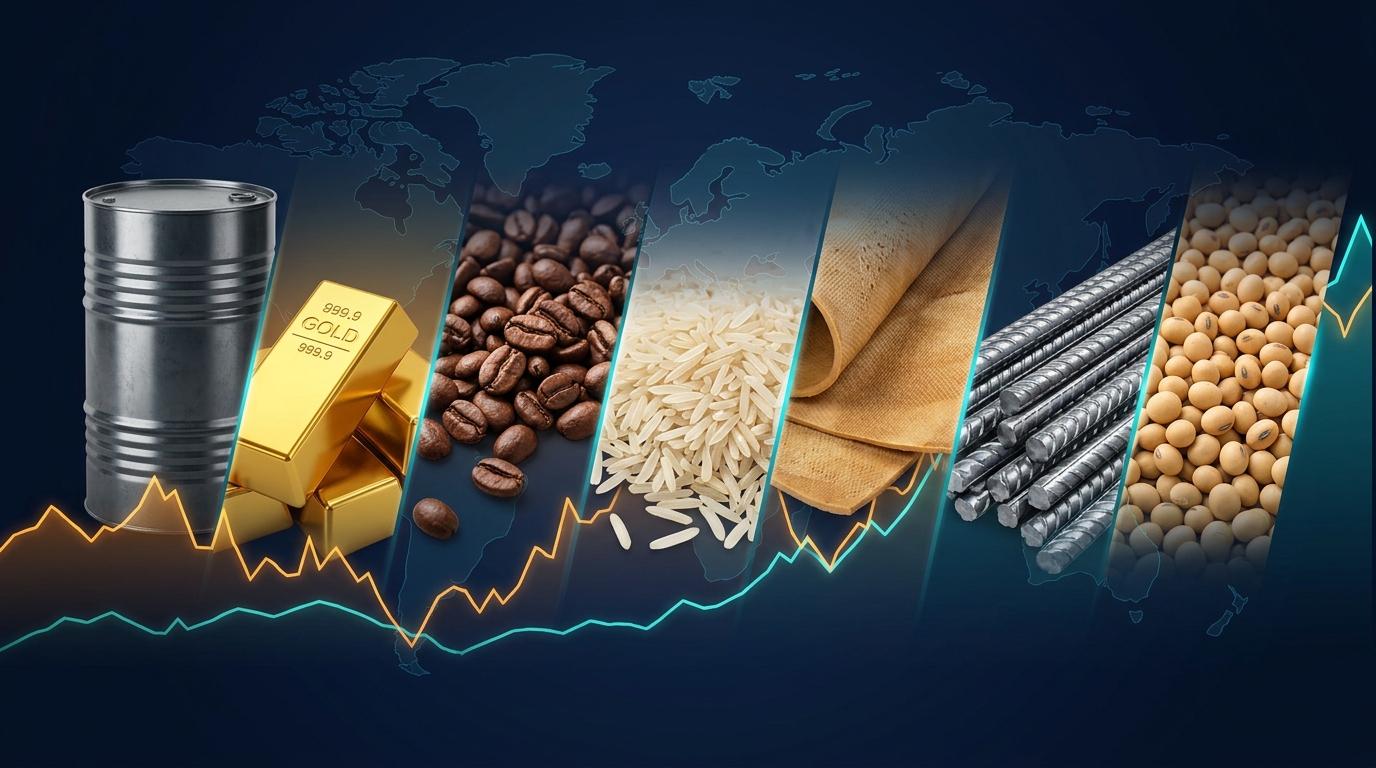
The commodity market experienced significant volatility in the agricultural and precious metals sectors last week, amid escalating geopolitical tensions in Eastern Europe and mixed signals from the global economy. The composite commodity price index was directly impacted by Ukraine's declaration of the paralysis of the Kerch Strait and attacks on Russian vessels, raising concerns about supply chain disruptions for energy and food in the Black Sea region. In Vietnam, the focus on key transport infrastructure projects, such as the Van Phuc Bridge and Nguyen Tuan Road, is creating new momentum for the domestic construction materials market.
SECTOR: Agriculture
Cocoa and Arabica Coffee prices led the gains in the agricultural sector last week due to concerns over supply and international logistics costs. Specifically, Cocoa prices surged 6.04% to reach 6,065.00 USD/mt on July 12, 2026, significantly higher than the monthly average of 3,996.13 USD. Similarly, Arabica Coffee maintained a steady upward trend of 3.92%, closing the week at 334.25 UScents/lb (equivalent to approximately 193.5 million VND/ton).
- Wheat and Corn: Wheat prices rose 3.31% to 640.25 UScents/bu, and corn increased 2.4% to 438.00 UScents/bu. The primary cause stems from the Russia-Ukraine conflict, as Ukraine claimed to have attacked nearly 30 Russian vessels, directly threatening the world's largest grain export corridor.
- Rubber: Remained stable at 217.20 JPY/kg (+0.46%). In Vietnam, the context of converting agricultural land to residential land in Quang Ninh shows a trend of shrinking traditional cultivation areas, which could affect long-term supply.
- Rice: International rice prices rose slightly by 0.67% to 13.35 USD/CWT. However, there were no new updates for 5% broken rice from Vietnam and Thailand in this reporting period.
Outlook: In the coming week, the grain sector will remain sensitive to news regarding hostilities in the Kerch Strait. It is projected that wheat and corn prices may maintain their upward momentum if maritime transport conditions do not improve.
SECTOR: Metals
The precious metals market maintained its appeal as a safe-haven asset, with Gold holding firm at a record high above 4,100 USD/toz. Closing the session on July 12, 2026, world Gold prices reached 4,121.10 USD/toz (approximately 130.5 million VND/tael), a slight increase of 0.07%, while maintaining a stable position amid persistent geopolitical risks from Iran and the Middle East.
- Aluminum: Rose 1.95% to 3,146.30 USD/mt. This growth is supported by demand from infrastructure projects. In Vietnam, the Ministry of Construction is accelerating the progress of a series of key transport projects, along with the completion of Nguyen Tuan Road and Van Phuc Bridge, creating stable demand for aluminum and industrial metals.
- Copper: Recorded a slight decline of 0.45% to 625.15 UScents/lb. Toyota's sell-off of billions of USD in shares and fierce competition in the Chinese electric vehicle industry ("cannibalizing itself") have raised concerns about a slowdown in the manufacturing sector, affecting copper consumption demand.
- Platinum and Zinc: Platinum rose 1.46% to reach 1,651.90 USD/toz, while Zinc increased 0.41% to reach 3,614.30 USD/mt.
Outlook: Precious metals will likely continue to trade sideways at high price levels. Aluminum and steel may see slight gains thanks to public investment packages and large-scale social housing projects (such as the 2,000-apartment project in Nghe An) currently being implemented.
SECTOR: Energy
World crude oil prices fluctuated within a narrow range but showed a slight upward trend due to military activities targeting maritime transport infrastructure. WTI Crude Oil rose 0.93% to 71.41 USD/bbl, and Brent crude increased 0.38% to reach 76.01 USD/bbl on July 12, 2026. Ukraine's declaration of the paralysis of the Kerch Strait is a key factor preventing a decline in oil prices, even though global consumption demand has not yet seen a breakthrough.
- Natural Gas: Rose 2.39% to 2.94 USD/mmbtu. Although the monthly average is 3.14 USD, the recovery during the week indicates that supply pressure is returning.
- Coal: Increased 1.04% to reach 128.60 USD/mt, reflecting the demand for energy stockpiling for industrial production during the peak summer season.
Outlook: Geopolitical risks in Russia and Ukraine will be the biggest variable for the energy sector. If the Kerch Strait remains blocked, Brent crude prices could soon test the 80 USD/bbl threshold.
SECTOR: Food
Meat prices remained stable despite macroeconomic fluctuations and the wave of layoffs at major corporations like Amazon. World pork traded at 94.78 USD/lbs (+0.48%), while chicken reached 7.26 BRL/kg (+0.97%).
- Beef: Reached 326.65 BRL/kg (equivalent to approximately 1.34 billion VND/ton), a slight increase of 0.6% compared to the beginning of the week.
- Psychological Impact: The event of 30,000 Amazon employees being laid off and difficulties in the tech industry have somewhat affected luxury consumption sentiment, but demand for essential food items remains stable.
Outlook: The food sector is unlikely to see significant volatility in the coming week. However, rising logistics costs due to maritime transport tensions could push import prices for food in the Vietnamese market slightly higher.
Most Notable Commodities of the Week
Cocoa was the most surprising commodity with a surge of over 6%, reflecting a severe supply shortage from key growing regions. Wheat was also a focal point as it was directly impacted by attacks on vessels in the Kerch Strait, making this commodity highly sensitive to the war situation. Conversely, Copper showed a slight weakness due to the impact of instability in the automotive manufacturing industry and the Japanese stock market (the Toyota event).
Forecast and Recommendations for the Coming Week (July 13, 2026 - July 19, 2026)
Trend Forecast: The commodity market next week will continue to be under pressure from geopolitical factors. The energy and grain sectors are likely to see price increases due to maritime transport risks. The industrial metals sector will diverge, depending heavily on the pace of public investment disbursement in major markets like Vietnam and China.
- For manufacturing enterprises: It is necessary to proactively lock in input material contracts (especially for aluminum and energy) to avoid the risk of price hikes due to supply chain disruptions in the Black Sea region.
- For investors: Gold remains a safe-haven asset as geopolitical conflicts show no signs of cooling down. It is necessary to closely monitor the VN-Index and movements in the stock market to adjust derivative commodity portfolios accordingly.
- Risks to monitor: Developments in the war in Ukraine, trade policies regarding Chinese electric vehicles, and global employment reports following the wave of layoffs at Amazon.
Share this insight: