 Deutsch
  English
  Español
  Français
  Bahasa Indonesia
  日本語
日本語  한국어
한국어  Nederlands
  Português
  Tiếng Việt
  中文
中文 Commodity Market Summary Report for the Week of 07/20/2026 - 07/26/2026
AI Market Digest
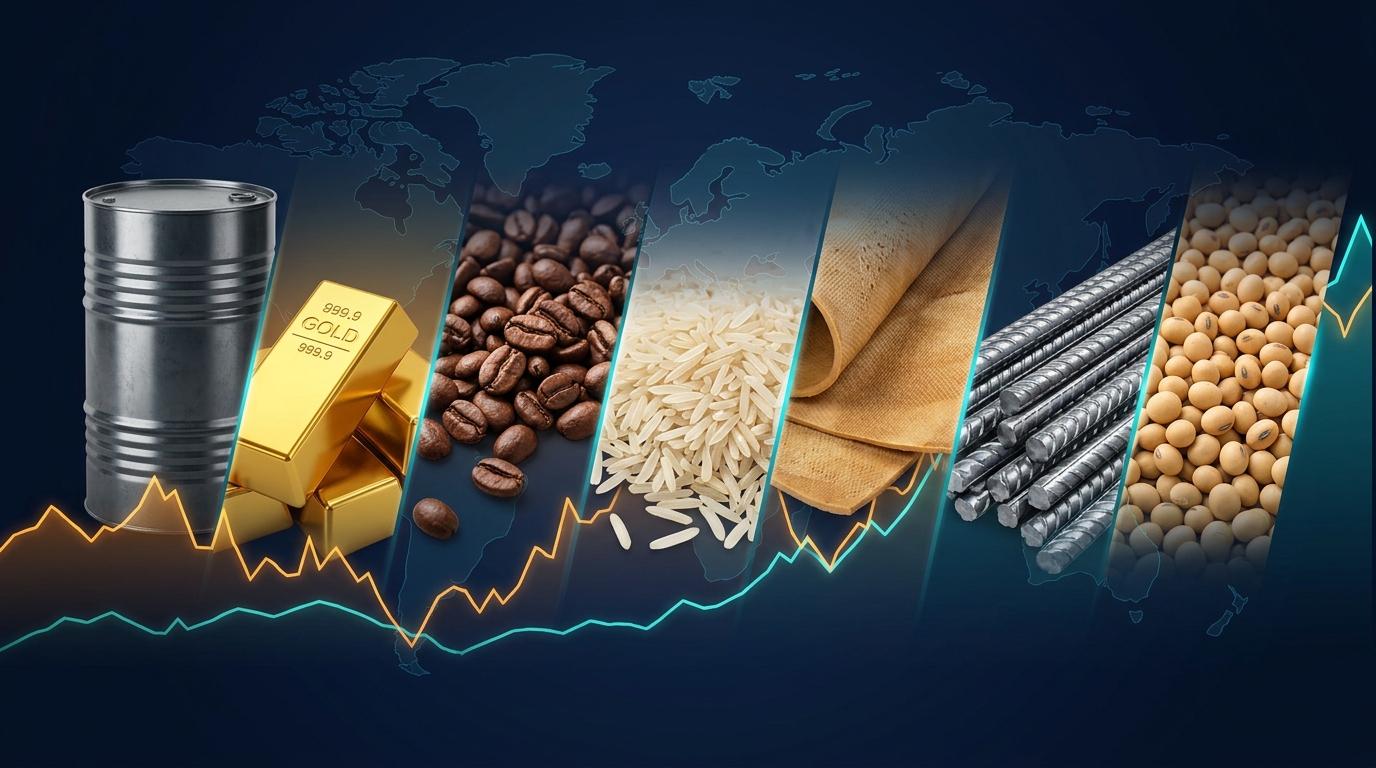
The global commodity market during the week of July 20 to July 26, 2026, recorded complex fluctuations, primarily driven by escalating geopolitical conflicts in Eastern Europe and the Middle East. The incident involving Romania deploying F-16 fighter jets to shoot down a Russian unmanned aerial vehicle (UAV), coupled with strikes on UAV production facilities in Kiev, pushed the prices of energy and strategic agricultural commodities like wheat to surge. In Vietnam, the spotlight remained on rice prices for export, which maintained high levels, while key transport infrastructure projects are fueling long-term expectations for raw material consumption.
SECTOR: Energy
Global crude oil prices recorded an impressive week of growth due to concerns over supply chain disruptions at geopolitical hotspots. Brent crude closed the week at 98.38 USD/bbl (up 2.29%), while WTI crude reached 90.47 USD/bbl (up 1.87%).
- Causes: Tensions in the Strait of Hormuz intensified after Iran announced the destruction of a US military aircraft, and the US military's submission of plans for airstrikes on Iran (though temporarily not approved by Mr. Trump) created immense upward price pressure. Additionally, Russian attacks on energy and production infrastructure in Ukraine have raised market concerns regarding supply from the Black Sea region.
- Natural Gas: US natural gas prices reached 2.88 USD/mmbtu (up 1.16%), reflecting the demand for energy stockpiling for the upcoming peak season amidst instability.
- Outlook for next week: Oil prices are forecast to remain high, above 95 USD/bbl, if clashes in the Middle East show no signs of cooling down.
SECTOR: Agriculture
Agriculture was a sector with strong divergence, with wheat and coffee leading the growth momentum. Wheat recorded a notable increase of 2.62%, reaching 678.00 UScents/bu, as military actions in the "breadbasket" of Ukraine and Russia continued to escalate.
- Rice: Global rice prices remained stable at 13.99 USD/CWT (up 0.99%). Notably, in the Vietnamese market, export rice prices remained high, affirming the position of Vietnamese agricultural products in the international market despite global logistics challenges.
- Arabica Coffee: Closed the session at 314.09 UScents/lb (up 1.51%). Interesting news regarding Dutch consumers being willing to pay 200,000 VND for a cup of Vietnamese phin coffee shows that the appeal of the Vietnamese coffee brand is spreading strongly in Europe, supporting positive sentiment for coffee prices.
- Other commodities: Rubber remained stable at 219.30 JPY/kg (+0.41%), while Cocoa rose sharply by 1.41% to 5,376.00 USD/mt due to supply shortages from West Africa.
- Outlook for next week: Wheat and corn prices may continue to rise if the Black Sea grain corridor is threatened by UAV attacks.
SECTOR: Metals
The precious and industrial metals markets maintained a consolidation state within a narrow range. Gold held its position as a safe-haven asset, closing the week at 4,052.00 USD/toz (up slightly by 0.06%), equivalent to approximately 128,599,985 VND/tael.
- Precious metals: Platinum rose 1.46% to reach 1,651.90 USD/toz, while Silver remained stable at 57.98 USD/toz (+0.6%). Investors are cautiously observing military moves between NATO and Russia to adjust their portfolios.
- Industrial metals: Aluminum rose 0.83% to reach 3,165.10 USD/mt. In Vietnam, information regarding the development of 12 dynamic urban areas in Bac Ninh and the proposal of 30 trillion VND for the Bac Kan - Cao Bang expressway is creating high expectations for steel and aluminum demand in infrastructure construction for the second half of 2026.
- Outlook for next week: Gold prices have the potential to break through old resistance levels if the US-Iran conflict takes unpredictable new turns.
SECTOR: Food
Fresh food prices did not see significant fluctuations, reflecting a temporary balance between supply and demand.
- Pork: Global pork prices reached 102.80 USD/lbs (up 0.64%). In Vietnam, domestic consumption demand is stable; however, recent warehouse fires in Hanoi have caused localized concerns regarding the food supply chain in the Northern region.
- Beef and Chicken: Beef remained stable at 344.20 BRL/kg (+0.13%), and chicken reached 7.16 BRL/kg (+0.42%).
- Outlook for next week: The food sector is forecast to move sideways, unless transportation costs (due to rising oil prices) begin to significantly impact retail prices.
Most notable commodities of the week
Wheat and Brent crude oil were the two most prominent commodities over the past week.
- Wheat (+2.62%): Rose sharply due to Russia attacking UAV production facilities in Kiev and Romania shooting down a Russian UAV right at the NATO border, sparking fears of an all-out war affecting grain exports.
- Brent crude (+2.29%): Reacted directly to military statements in Iran's Strait of Hormuz and production disruptions due to the war in Ukraine.
Forecast and recommendations for next week (07/27/2026 - 08/02/2026)
Trend forecast:
- Energy: Strong increase. Geopolitical risks in the Middle East and Eastern Europe remain the primary drivers pushing oil prices toward the 100 USD/bbl mark.
- Agriculture: Slight increase. Rice and wheat will anchor at high levels. Vietnamese rice exporters should take advantage of the good pricing but also note that logistics costs are rising in line with gasoline prices.
- Metals: Stable/Increase. Gold remains the preferred safe-haven channel. Construction metals in Vietnam may flourish thanks to accelerated progress on expressway and Metro projects.
Risk recommendation: Investors need to pay special attention to developments in the Strait of Hormuz and the actions of NATO at the Ukrainian border. Any direct military action could cause the commodity market to fall into a state of extreme volatility. For domestic businesses, managing exchange rate risks and energy input costs is the top priority for the coming week.
Share this insight: